Natchez Revisited on the Veranda…
March 11, 2012 by ciji · Leave a Comment
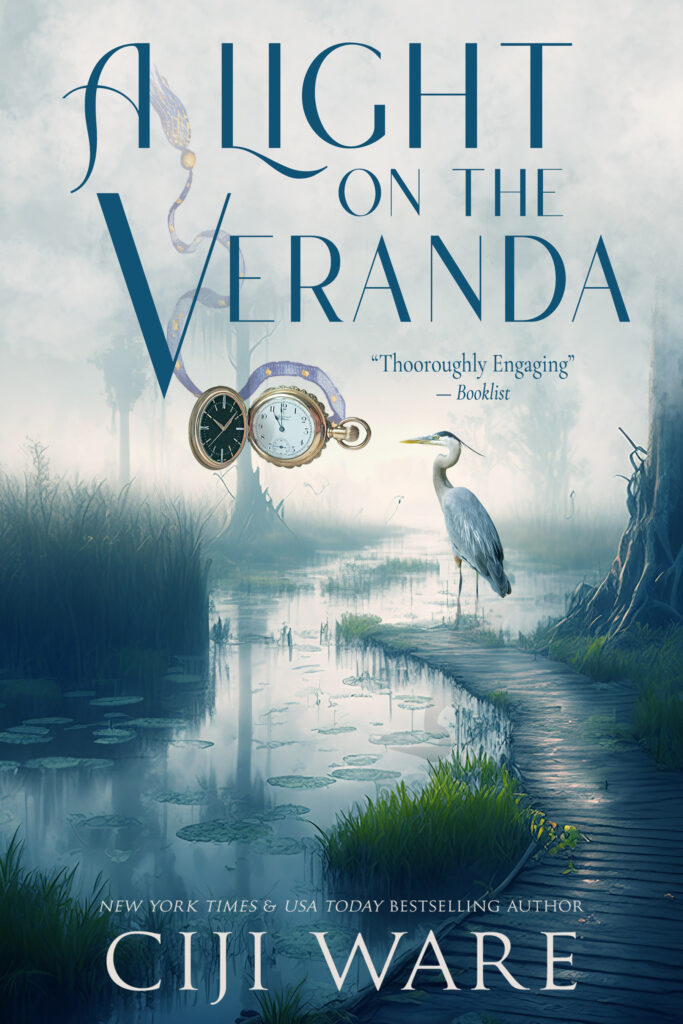
 My latest release from Sourcebooks Landmark, A Light on the Veranda, was March 1, and with it, the usual “guest blogging” I’m asked to do on some terrific historical novel sites that I will link to below. What has been such a joy is to have dug through masses of photographs that I took during the research period into the “Town that Time Forgot” for the stand-alone sequel to Midnight on Julia Street.
With every novel I have ever written, there is always a “story-behind-the-story” and with Veranda this certainly held true. Rather than retell my various adventures, I thought I’d just post the guest blogs as they hit the Internet.
Here are links to the first three:
And also Great Minds Think Aloud
If you enjoy these three, it would be terrific to let the blog hosts know! And come visit me at Facebook:
Culinary Research in the Big Easy
January 11, 2012 by ciji · Leave a Comment
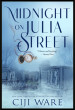
 A wonderful new “Author’s Cut” edition of my novel, Midnight on Julia Street, was recently released by Sourcebooks, and prompted so many memories from the days when I was researching life in modern day and 1840 New Orleans. This “time-slip” story deals with burnt out television reporter who arrives in the Big Easy with high hopes that at last, she can tell the truth as a journalist without getting fired. (No such luck, I’m afraid…)
Julia Street–once the heart of the cotton warehouse region of the city in the 19th century–is host these days to trendy galleries and fabulous eateries like Emeril’s. 
This part of town became the focus of many a foray I made into the wonderful world of Louisiana cuisine that, at times, figured in the story of a young professional getting to learn about a city famous for a certain flavor of magic and mystery. Scents, especially, became the “way back” for the heroine inexplicably to slip between the city’s storied past when “Cotton was King” and the modern day of cell phones, digital news-gathering, and a city that never stops celebrating.
Part of that celebrating that I had the good fortune to witness generally involved that most hallowed of all culinary traditions in NOLA: making a good Gumbo! Everyone, it seemed, had his or her own special recipe or way of making a roux–the “building block” of any respectable gumbo. There are seafood gumbos, chicken and sausage gumbos, even vegetarian gumbos, but the one I developed over the last fifteen years was made either with quail, Rock Cornish Game Hens, or–if pressed for time–organic chicken thighs…or even a rotisserie chicken from the supermarket!
 So, if you want to add to the sensory experience of reading my historical novel Midnight on Julia Street, get into the spirit of the Mardi Gras season that started with Twelfth Night (January 6, 2012) and will run until Fat Tuesday (February 21) by trying out my version of New Orleans Gumbo as posted in my blog…and if you like your gumbo spicier, just add pepper flakes and more cayenne!
New Year’s Eve in New Orleans!
January 5, 2012 by ciji · Leave a Comment
 It’s been several years since we owned our Creole cottage on Ursulines Street in the Lower French Quarter in New Orleans…but every year as the holidays roll around, I get an irresistible urge to make “my” gumbo.
Actually, there is no “official” recipe for this dish…families have handed down their ingredients and techniques for generations. I developed my own version when I spent a few years there researching and then writing Midnight on Julia Street, and created a chicken-and-sausage gumbo that evolved over the years from a recipe I found in Emeril LaGasse’s wonderful cookbook, Emerl’s Creole Christmas. His used quail, and since that wasn’t always handy, I subsituted small Rock Cornish Game Hens. His used alot of cayenne and spicey andouille sausage, but my Western-raised family liked smokey flavors that wouldn’t burn your tongue, so I made a few more adaptations.
During this same period, my husband Tony and I became great friends with another historical novelist, Michael Llewellyn who’d written a wonderful novel, also set in New Orleans, called Twelfth Night and who made the best chicken gumbo I ever tasted. He shared a few secrets with me which altered and refined my “morphing” version until I thought I’d reached pretty much perfection, and stopped messing with it.
Enter my wonderful pal from my KABC Radio days in Los Angeles, Diane Rossen Worthington, author of some twenty-two cookbooks (a number of them in the Williams-Sonoma series–but probably her best known and best loved is the classic: Seriously Simple).  She now writes a syndicated column for The Chicago Tribune and we were chatting on the phone this autumn about holiday fare. I mentioned how I loved to make my gumbo, stirring the roux –which is made from slowly combining oil and flour together and takes about 45 minutes to attain a rich, dark, chocolately color–while thinking of all the friends and family members I love.
“Can I use that in my column?” asked Diane.
“Sure,” I replied. “I can email you the recipe and you can put your own spin on it.”
“Oh, no, thanks,” she said. “I have my own seafood version I’ve been doing for years. I just want to borrow the part about you thinking of family and friends while you’re stirring the roux!”
Well, she did just that in December, and guess what? I’d completely forgotten about our conversation and suddenly I hear from the publicist Beth Pehlke at my publisher, Sourcebooks Landmark, that Diane’s piece, kindly mentioning my 2011 release of Midnight on Julia Street, had hit tons of newspapers all over the country. So, here’s a link to Diane’s article and version of seafood holiday gumbo–which makes a great Winter meal anytime it’s cold outside. And if there’s interest, I’ll post my chicken and kilbasa sausage version in a later blog.
Meanwhile, Happy New Year, everybody…and for 2012, Laisser Les Bons Temps Rouler, y’all!
Visiting Old Haunts in the Big Easy
August 14, 2011 by ciji · Leave a Comment
The new-and-improved edition from Sourcebooks-Landmark of my second “woo-woo” novel, Midnight on Julia Street hit the bookstores and online retailers August 1, but in June, I had a wonderful chance to revisit some of my old haunts in New Orleans and environs. The American Library Association was holding its convention in the Big Easy and my publisher asked if I’d be willing to sit in their booth and sign books.
Well, yes! Yes, indeed, I would!
Next to my home city of San Francisco, New Orleans is one of my favorite places on the planet. After spending over a year researching Julia Street, I did what so many lovers of that city do: I bought a place in the lower (residential section) French Quarter on Ursulines Street between Dauphine and Bourbon where the pace is slower and the sense of history surrounds you on every corner. We loved our tiny piece of Le Vieux Carre, but after a couple of years, found it difficult to manage it properly from 2000 miles away and have since sold it.
 Since Julia Street’s plot was deeply embedded in the on-going struggle to preserve and maintain the city’s incredible historic architecture, I decided to revisit some of key spots depicted in the novel. On an early, steamy Monday morning, I departed the fabulous view of the Mississippi River from my room at the Sheraton Hotel on Canal Street, and headed over on foot–as does Corlis McCullough, the heroine in the novel–for my favorite morning ritual: a cup of cafe au lait and a beignet at the famed 7/24 establishment Cafe du Monde.
The coffee, of course, was already flowing, though the chairs outside at 6a.m. hadn’t yet been lifted down from the tables where the floor had been cleaned in the wee hours of the morning. As usual, there were lines waiting for that first cup of steaming, chickory-laced brew and the decadent confection of deep-fried puff pastry dredged in about an inch of powdered sugar.
(Tourist tip: do NOT wear anything black when eating a beignet!).
I munched on this ambrosia, read my morning copy of The Times Picayune, gazed across Decatur Street and into the gated park at Jackson Square dominated by the three-spire magnificence of St. Louis Cathedral (which you can see on the cover of Julia Street). I found myself offering up thanks to whatever Muse originally gave me the idea for a book about the good fight waged daily by a stalwart band of dedicated preservationists to save various aging structures around the city from the wrecking ball. The “Live in a Landmark” program and other efforts sponsored by the Preservation Resource Center of New Orleans have gone far to keep the city’s historic “built environment” alive and well–and still live-able.
Once I’d dusted off the powdered sugar that had rained down on my T-shirt and jeans, I began a leisurely stroll through the streets I’d come to know so well. The Rue Royal, as you see here, Ursulines, where we’d owned our cottage, and eventually I circled back to Canal Street where the Salin buildings still stand with their less-than-esthetic 50’s-era metal cage, behind which are a row of stunning 19th century townhouses that some officials in the City of New Orleans and some developers wanted to tear down at one point to build a high rise hotel. The metal cage encasing the old buildings is still there, but so are those precious structures behind it (which you can see a glimpse of, if you look carefully). What makes them especially noteworthy is that in the 19th century they were built and owned by a consortium of local citizens that included Free People of Color, and some prominent white citizens, among them: Paul Tulane of Tulane University fame. It was a very early version of a “Rainbow Coalition” when Cotton was King.
 Apparently, post-Katrina, the fight over this particular issue is at a Louisiana stand-off, but in Julia Street –a work of fiction, remember–I devise a plot (and a fate for these buildings) that I hope the reader finds satisfying. However, I’m not telling what happens, here, but just wanted to share the wonderful time I had in one of the most wonderful, brave, enduring places in America.
Now, THIS is a Book Launch Party!
July 12, 2011 by ciji · Leave a Comment
 On the eve of April 18, 2011’s 105th anniversary of the cataclysmic 1906 San Francisco Earthquake and Firestorm, my publisher, Sourcebook, and its Landmark division of historical novels–in partnership with Nob Hill’s fabled Fairmont Hotel–hosted an incredible book launch party for my new novel A Race To Splendor!
My job, as author, was to invite 125 guests representing local San Francisco Bay Area media, and anyone with links to historic preservation, local history, and the world of admirers of Julia Morgan, a “real life” character whose saga of restoring the post-quake Fairmont after the disaster when she was only 34-years-old and the first licensed woman architect in California, is the centerpiece of my novel.
The event was held from 4 to 7pm in the Fairmont’s legendary penthouse “Owners’ Suite” (also known as the “Presidential Suite” since numerous Commanders-in-Chief have stayed there), and featured wine and elegant nibbles within the huge apartment and terraces with views of the entire city and bay.
On the bottom of the invitation, in tiny print, were the words “1906 Attire – Optional.”
Well, just have a look at the response! Of the more than a hundred attendees, perhaps eighty percent had come in full regalia. The Edwardian costumes included top hats, feather boas, “fascinator” chapeaux, and even, for the gents, spats and gold-headed canes!
This is San Francsico, after all, where citizens are passionately proud of their city and its amazing and rambunctious history. 
Friends arrived in the foyer full of a sense of being part of that special day when we celebrated, yes, the publication of an historical novel about the tumultuous rebuilding of a town that saw 400 city blocks demolished and 350,000 of its 410,000 population left homeless for up to two-and-a-half years… but it was also about celebrating a wonderful hotel that is still standing in all its regal splendor, and a hometown that not only survived this horrible disaster, but, like Humpty-Dumpty, put itself back together again through sheer grit and moxie.
April 18th was a time to raise a glass and celebrate ourselves, which we did in fine fashion! My family and I felt privileged to be part of this recent moment in history, and, as you can see, dressed to fit the occasion.  My son and daughter-in-law flew out from their home in New York City; my sister, cousins, and god-children arrived from all parts of California, and local friends and media colleagues, alike, got into the spirit of one of the most incredible parties an author could have been given to launch her book. Perhaps in view of recent events like Katrina, the quake in Haiti and Japan, and the BP Oil Spill, these San Franciscans, above all people, know how fragil and precious life is and just being in our beautiful city to mark such an important anniversary was cause, enough, for celebration…