New Year’s Eve in New Orleans!
January 5, 2012 by ciji · Leave a Comment
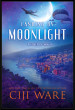
 It’s been several years since we owned our Creole cottage on Ursulines Street in the Lower French Quarter in New Orleans…but every year as the holidays roll around, I get an irresistible urge to make “my” gumbo.
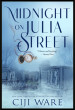
Actually, there is no “official” recipe for this dish…families have handed down their ingredients and techniques for generations. I developed my own version when I spent a few years there researching and then writing Midnight on Julia Street, and created a chicken-and-sausage gumbo that evolved over the years from a recipe I found in Emeril LaGasse’s wonderful cookbook, Emerl’s Creole Christmas. His used quail, and since that wasn’t always handy, I subsituted small Rock Cornish Game Hens. His used alot of cayenne and spicey andouille sausage, but my Western-raised family liked smokey flavors that wouldn’t burn your tongue, so I made a few more adaptations.
During this same period, my husband Tony and I became great friends with another historical novelist, Michael Llewellyn who’d written a wonderful novel, also set in New Orleans, called Twelfth Night and who made the best chicken gumbo I ever tasted. He shared a few secrets with me which altered and refined my “morphing” version until I thought I’d reached pretty much perfection, and stopped messing with it.
Enter my wonderful pal from my KABC Radio days in Los Angeles, Diane Rossen Worthington, author of some twenty-two cookbooks (a number of them in the Williams-Sonoma series–but probably her best known and best loved is the classic: Seriously Simple).  She now writes a syndicated column for The Chicago Tribune and we were chatting on the phone this autumn about holiday fare. I mentioned how I loved to make my gumbo, stirring the roux –which is made from slowly combining oil and flour together and takes about 45 minutes to attain a rich, dark, chocolately color–while thinking of all the friends and family members I love.
“Can I use that in my column?” asked Diane.
“Sure,” I replied. “I can email you the recipe and you can put your own spin on it.”
“Oh, no, thanks,” she said. “I have my own seafood version I’ve been doing for years. I just want to borrow the part about you thinking of family and friends while you’re stirring the roux!”
Well, she did just that in December, and guess what? I’d completely forgotten about our conversation and suddenly I hear from the publicist Beth Pehlke at my publisher, Sourcebooks Landmark, that Diane’s piece, kindly mentioning my 2011 release of Midnight on Julia Street, had hit tons of newspapers all over the country. So, here’s a link to Diane’s article and version of seafood holiday gumbo–which makes a great Winter meal anytime it’s cold outside. And if there’s interest, I’ll post my chicken and kilbasa sausage version in a later blog.
Meanwhile, Happy New Year, everybody…and for 2012, Laisser Les Bons Temps Rouler, y’all!
Now, THIS is a Book Launch Party!
July 12, 2011 by ciji · Leave a Comment
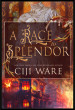
 On the eve of April 18, 2011’s 105th anniversary of the cataclysmic 1906 San Francisco Earthquake and Firestorm, my publisher, Sourcebook, and its Landmark division of historical novels–in partnership with Nob Hill’s fabled Fairmont Hotel–hosted an incredible book launch party for my new novel A Race To Splendor!
My job, as author, was to invite 125 guests representing local San Francisco Bay Area media, and anyone with links to historic preservation, local history, and the world of admirers of Julia Morgan, a “real life” character whose saga of restoring the post-quake Fairmont after the disaster when she was only 34-years-old and the first licensed woman architect in California, is the centerpiece of my novel.
The event was held from 4 to 7pm in the Fairmont’s legendary penthouse “Owners’ Suite” (also known as the “Presidential Suite” since numerous Commanders-in-Chief have stayed there), and featured wine and elegant nibbles within the huge apartment and terraces with views of the entire city and bay.
On the bottom of the invitation, in tiny print, were the words “1906 Attire – Optional.”
Well, just have a look at the response! Of the more than a hundred attendees, perhaps eighty percent had come in full regalia. The Edwardian costumes included top hats, feather boas, “fascinator” chapeaux, and even, for the gents, spats and gold-headed canes!
This is San Francsico, after all, where citizens are passionately proud of their city and its amazing and rambunctious history. 
Friends arrived in the foyer full of a sense of being part of that special day when we celebrated, yes, the publication of an historical novel about the tumultuous rebuilding of a town that saw 400 city blocks demolished and 350,000 of its 410,000 population left homeless for up to two-and-a-half years… but it was also about celebrating a wonderful hotel that is still standing in all its regal splendor, and a hometown that not only survived this horrible disaster, but, like Humpty-Dumpty, put itself back together again through sheer grit and moxie.
April 18th was a time to raise a glass and celebrate ourselves, which we did in fine fashion! My family and I felt privileged to be part of this recent moment in history, and, as you can see, dressed to fit the occasion.  My son and daughter-in-law flew out from their home in New York City; my sister, cousins, and god-children arrived from all parts of California, and local friends and media colleagues, alike, got into the spirit of one of the most incredible parties an author could have been given to launch her book. Perhaps in view of recent events like Katrina, the quake in Haiti and Japan, and the BP Oil Spill, these San Franciscans, above all people, know how fragil and precious life is and just being in our beautiful city to mark such an important anniversary was cause, enough, for celebration…
Hangin’ with a “Rock Star” Author
November 16, 2010 by ciji · Leave a Comment
 There is nothing like hanging out with a major bestselling author like Diana Gabaldon (standing, second from left) to remind a fellow author that novels–especially historical novels–are sold one book at a time.
You see us here (along with several other attendees at the November Scribblers Retreat Writers Conference) smiling happily after a fabulous lunch at Coastal Kitchen, a local eatery on the causeway to St. Simons Island off the coast of Georgia. We had just imbibed great quantities of local shrimp, blue crab cakes and hush puppies, not to mention the pecan pie.
No wonder we’re all smiling.
Gabaldon, the author of the nearly cult-status, #1 New York Times Bestselling novels, the Outlander Series, is published in some 23 countries in 19 languages. Even so, just like the rest of us, she continues to attend conferences as a speaker and does book signings all over the country and–thanks to her international audience–abroad as well.
The room for her presentation was jam-packed, but it struck me as I gazed at the pile of books for sale written by all the authors at the conference, including yours truly, that no matter who you are, books are sold as each reader makes his or her own buying decision. I watched as audience members would pick up one of our hefty titles (Diana, whom I have known since we both were first-time novelists, writes books even thicker than I do). Our potential customers would turn it over to read the back cover copy, and, in seven seconds or less, decide whether or not to make a purchase.
Trust me, whether you’re Diana Gabaldon, Ciji Ware, or whomever, it’s a humbling experience, especially in a recession economy. Fortunately, we all had enough people asking us to autograph our work to be extremely gratifying, but it was a timely reminder that it’s “book-by-book,” no matter whom you are.
That’s why another keynote speech at the Scribblers Conference had a huge impact on most of us in attendance, whether we were writers or readers.
Dominique Raccah, the dynamic CEO of my publisher, Sourcebooks, delivered an unforgettable “state of the state of publishing” presentation entitled Publishing in the Digital Age: A Time of Transformation.
Founding Sourcebooks in 1987 out of her home in Naperville, Illinois, Raccah has directed a continuously growing entrepreneurial creative organization that morphed into a general trade house passionately producing some 300 titles a year: everything from bestsellers in fiction, poetry, parenting and study aids, to 14 New York Times Bestsellers and more than twenty national bestsellers.
Dominique Raccah currently serves as co-chair of the Book Industry Study Group working through the issues of digital publishing on the variety of e-devices currently crowding the market: the Kindle, Sony Reader, the Nook. You name it, Dominique knows all about it ,as well as the newest New Thing coming down the pipeline.
 I’ll have more about her presentation in my next blog…but suffice it to say, it had Diana Gabaldon and the rest of us hanging on her every word! I was so blown away by the exciting vision she painted of the future of publishing, I took to an old fashioned (rental) bike, and calmed down by taking in the lovely local sites…
For you travel bugs, this is the “Bloody Marsh” on St. Simons where the British defeated the Spanish in 1742 while trying to avoid incoming musket balls and snakes!
A Second Act for a 17th c. Woman Playwright
October 19, 2010 by ciji · Leave a Comment
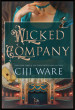
 Twenty years ago, when I began thinking about writing Wicked Company focusing on a group of eighteenth century “Petticoat Playwrights” whose works were performed to great success at London’s Covent Garden and Drury Lane theatres, even most English majors had never heard of the playwright Aphra Behn, whose dates are thought to be 1640-1689.
Now recognized as “one of the first women to earn her living by her pen,” the woman on your right has finally come into her own with several biographies and monographs describing her life as a spy, and later as a remarkably successful and prolific playwright in the Restoration era –a time after the monarchy was restored in the person of Charles II who allowed, at long last, women to play women’s parts on stages throughout Britain.
The daughter of a barber and a nurse, Aphra somehow managed to travel to Venezuela which was the setting for one of her later plays. Later, through friends and connections, she was recruited by King Charles II himself to pose as a widow in Antwerp and spy for the Crown, prior to the outbreak of a war between Britain and the Netherlands in 1665.
Sadly, the King neglected to pay her for her services to her country, and upon her return, she landed in Debtor’s Prison. Once released, she had plenty of fodder for her plays, which she proceeded to write starting in 1670 with astonishing speed in order to keep body-and-soul together (the plight of most writers through the ages, I’m sad to report).
Aphra Behn’s best-known works–some still produced today–are The Rover, Love-Letters Between a Nobleman and His Sister, and Oroonoko.
Her body of work includes some seventeen plays, four novels, two short stories, and seven collections of poems. Her writing was often vilified by the male-dominated literary world. Alexander Pope (1688-1744), born the year before she died, continually penned slights in the years following her death. Conveniently for him, the poor woman was unable to defend herself. Even in our own time, American critic and Yale Professor of the Humanities Harold Bloom called her a “fourth-rate playwright” in comparison to Shakespeare, adding rather spitefully that the interest of her in the era of Women’s Studies was an example of the “dumbing down” of the culture.
 Tell that to Liz Duffy Adams, winner of the 5th Annual Lillian Hellman Award! On November 4th, at San Francisco’s Magic Theatre –an organization that specializes in presenting new works–Adams’ play “Or,” opens. It features Aphra Behn as the central character, and I, for one, cannot wait to see it.
Described as follows on the Magic Theatre’s website, it sounds hilarious, and appears to be a wonderful vehicle for getting back at all those nasty male critics:
Aphra Behn is getting out of the spy game and into showbiz. If she can finish her play by morning, she’ll become the first professional female playwright. All that’s standing in her way are King Charles II, actress Nell Gwynne, and double agent William Scot, who may or may not be trying to murder the king. Double-crossing, cross-dressing, sex, art, and politics all come together in playwright Liz Duffy Adams’ hilarious bodice-ripper that peers into the life and times of the literal first lady of the stage.
I have a friend deeply involved in support of Magic Theatre and if I can twist her arm, I hope I’ll have a chance to meet Ms. Adams, pictured here on the right, and share with her the fact that I’ve been a booster of “our” heroine Aphra Behn for a long time. In fact, I dedicate the newly-released Sourcebooks Landmark edition of Wicked Company about the eighteenth century Petticoat Playwrights that followed in Aphra’s footsteps to the noteworthy playwright as a way of expressing my thanks to this incredible woman who did, indeed, earn her living by her pen.
Just as I do with my computer. Not much changes over the centuries, does it…?
Booksellers, Historical Fiction, & “Hand-Selling”
October 4, 2010 by ciji · Leave a Comment
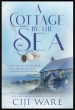
 I remember walking into the (now) 83-year-old independent Tecolote Bookshop in Montecito, California–seen here hosting Thomas Steinbeck at a signing–to show them the galleys for the first edition of A Cottage by the Sea. My favorite member of the small sales force peered at the title and then suddenly clutched the Advanced Reader’s Copy to her bosom and said with a sigh, “Oooooh, a cottage by the sea…every woman’s fantasy!”
I was extremely gratified to hear this as I was in a fierce battle with the book’s original publisher about the title. “They” wanted to change it, and I loved it and wanted to keep it.
I immediately sent an emergency fax (that’s how long ago this was) to the editor, recounting exactly what I’ve told you.
I knew this anecdote would have some weight because the scuttlebutt was that Tecolote was one of the up-market independent booksellers out West that the New York Times Sunday Book Review called to measure sales for its bestsellers’ list. I have no idea if that is true, but it was an accolade from an important store and, bless the hardworking staff there, it carried enough clout with the editors and marketers in New York to retain the book’s title!
 Every since that time, I have done my best to support and get to know the booksellers at both independent bookshops, like my local Habitat Books seen here, as well as the chain bookstore staffs in my area.
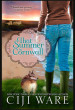
Historical novels, whether made of paper or downloaded onto an electronic reading device, are successful in great part due to this “hand-selling,” and I’ve been grateful for the fifteen years that A Cottage by the Sea has been in print in its various editions that booksellers have apparently given it a personal boost and created that “buzz” that can really make a difference in sales.
Just this morning I was walking with a friend down our main thoroughfare where the tourists stroll as soon as they step off the ferry from San Francisco, and lo and behold, there was the beautiful edition (and new cover) of Cottage–out since June of this year from Sourcebooks Landmark–up-front-and-center in the window of the store! I’ve met the owner, but hadn’t had a chance to go in and try to twist her arm to stock the book, to say nothing of begging her to put it in the window.
I handed my dog-walking pal my iPhone and said, “Quick! Take a snap, will you? I want to prove to the world how the independents are truly independent!” The owner chose to feature the book with no prompting from the author or publisher.

Books are sold by hand by these wonderful people who own bookstores…one book at a time. And now that the new edition of Wicked Company, about a group of women playwrights whose works were produced to great success at London’s Covent Garden and Drury Lane theaters, is about to debut this month, I guess I should get busy, go into Habitat Books to show them the new cover, and introduce myself again….
I’ve done that recently at a local gift shop, It’s Out of Hand, whose owner, Christine Butler, I know well.  Since we live in a maritime village facing San Francisco Bay, she put Cottage near the cash register with a sign “Signed by Local Author” and sells several copies a month talking about the similarities between Cornwall, England, where Cottage is set, and the California coasts along Carmel-by-the-Sea and Big Sur.
Another lesson in “books are hand sold, one book at a time.” Words to live by, I’d say.