My Mother, The Typist
May 12, 2013 by ciji · Leave a Comment
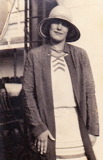 In honor of the Mother’s Day celebrations across the land, I want to pay homage to Ruth Ware, the quintessential Flapper when she graduated on the eve of the Great Depression from Radcliffe College–a school known in her day as the “Harvard Annex.” (Just an aside, but now women graduate from Harvard…)
We have long heard stories from friends like Maggie Richardson (on right, slanted hat–a newspaper woman in the 1940s and later editor for the Women’s Section at the old Los Angeles Examiner), that Ruthie may have been “one smart cookie,” but never let an approaching exam keep her from a good party at the Harvard Law School!
 The daughter of wealthy parents in Chicago, her graduation present was a trip around the world on an ocean liner, arriving back home October 1. On October 29th, the Crash of ’29 hit with such force that her father, who had invested most of his money “on margin,” lost the majority of his investments and, eventually, control of a washing machine company of which he was then president.
As breadlines became a common sight on city streets, the family moved to a cold water flat on La Salle Street. My grandmother reportedly had a nervous breakdown, my grandfather, who’d moved to Seattle to establish an insurance company, died mysteriously in a hotel, and Mom’s kid brother was told there would be no college education in his future.
 Ruthie immediately talked her way into a job as a switchboard operator in the Chicago law firm run by the father of her then-boyfriend—a charming young buck who immediately dropped her and married someone else. During those next tough years, my mother kept her mother in food and shelter and helped pay the tuition for her kid brother to remain in the Parker School, a posh private high school she’d also attended. Fortunately, their great uncle housed her brother while he earned his own way through a teacher’s college in Missouri.
Certainly, the 1930s were a far cry from my mother’s carefree 1920s when she wore stylish cloche hats, danced the Charleston all night, and appeared in amateur college theatricals (Ruth is second from left).
But lest we get too dewy-eyed at this juncture, it’s important to note that my mother was certainly no sentimentalist. This was the woman who, as Captain of the Girls Basketball Team, played the championship game with a broken arm! And as regards the annual celebrations of the mothers of this world, my mother considered Mother’s Day a “Hallmark Holiday, created solely to sell greeting cards–an idea the industry sold to their cronies in Congress.” No fluffy, romantic was Ruth Ware. True grit describes her best.
Her life story was a common one for women who were in their maturity in the 1950s: she ultimately became a wife and mother–and typist for my father, Harlan Ware, whom she met–where else?– at an office Christmas party.

By the time the two became engaged, my dad was launching into a successful career as a writer of films, short stories, radio dramas, novels, and ultimately television (though he hated the medium). He was of the opinion that writers–“to be real pros”–had to be willing to write anything and everything that could support a family of five, not to mention a couple of hangers-on relatives that traveled in our wake….
But was my mother merely the one who typed the final copy of whatever manuscript my father had on deadline that week? During their nearly forty years of marriage, she was right by his side, absorbing the sights and drama of their life together in Hollywood, and later, Carmel-by-the-Sea. Was she just the scribe who dutifully corrected his spelling and punctuation and never added or word of phrase of her own? Could this very brainy lady resist making a suggestion or two, or thinking, as she typed, typed, typed everyday upstairs in his office when he headed out to walk the Carmel Beach with our dog to clear his head, that a paragraph or two needed some serious editing–and then just do it?
 Having lived myself for nearly four decades with a fellow writer, I cannot believe she didn’t collaborate with him in some significant ways. Over the years, Tony and I certainly have, exchanging our work, making sometimes unwanted suggestions scribbled with our proverbial red pencils, but always admitting to each other afterward that what we’d produced was better for having been looked over by two sets of eyes before “the world” could make its critique.
My father often said that he was stunned he’d wooed and won a woman of such major intelligence and classical education–and he adored her. I remember him gazing at her one time when we were in the car, motor running, waiting for her to close the garage door. He said that day, “Marrying your mother was the luckiest thing that ever happened to me.” Was his statement purely personal, and had nothing to do with his profession? Hmmmmm…
Sadly, both of my parents died when I was in my twenties, and because I, too, became a professional writer, I probably mention my father far more often in casual conversation than I do my mom.
However, I think it’s about time I gave my mother her due. If she had lived in a different era, she could have been CEO of Facebook. Really. She was that sharp. And I have no doubt that–as writer Irving Stone‘s wife admitted after the death of the author of Lust for Life and other bestselling tomes–I suspect Ruth Ware did a lot more than just correct Harlan Ware’s typos.
 So Hallmark Holiday or not, Happy Mother’s Day, Mom….I salute and thank you for your high standards and demands for excellence, your mid-Western good sense, and your amazing grace under pressure.
Venice, Publishing, and My Paper Lion
May 6, 2013 by ciji · Leave a Comment
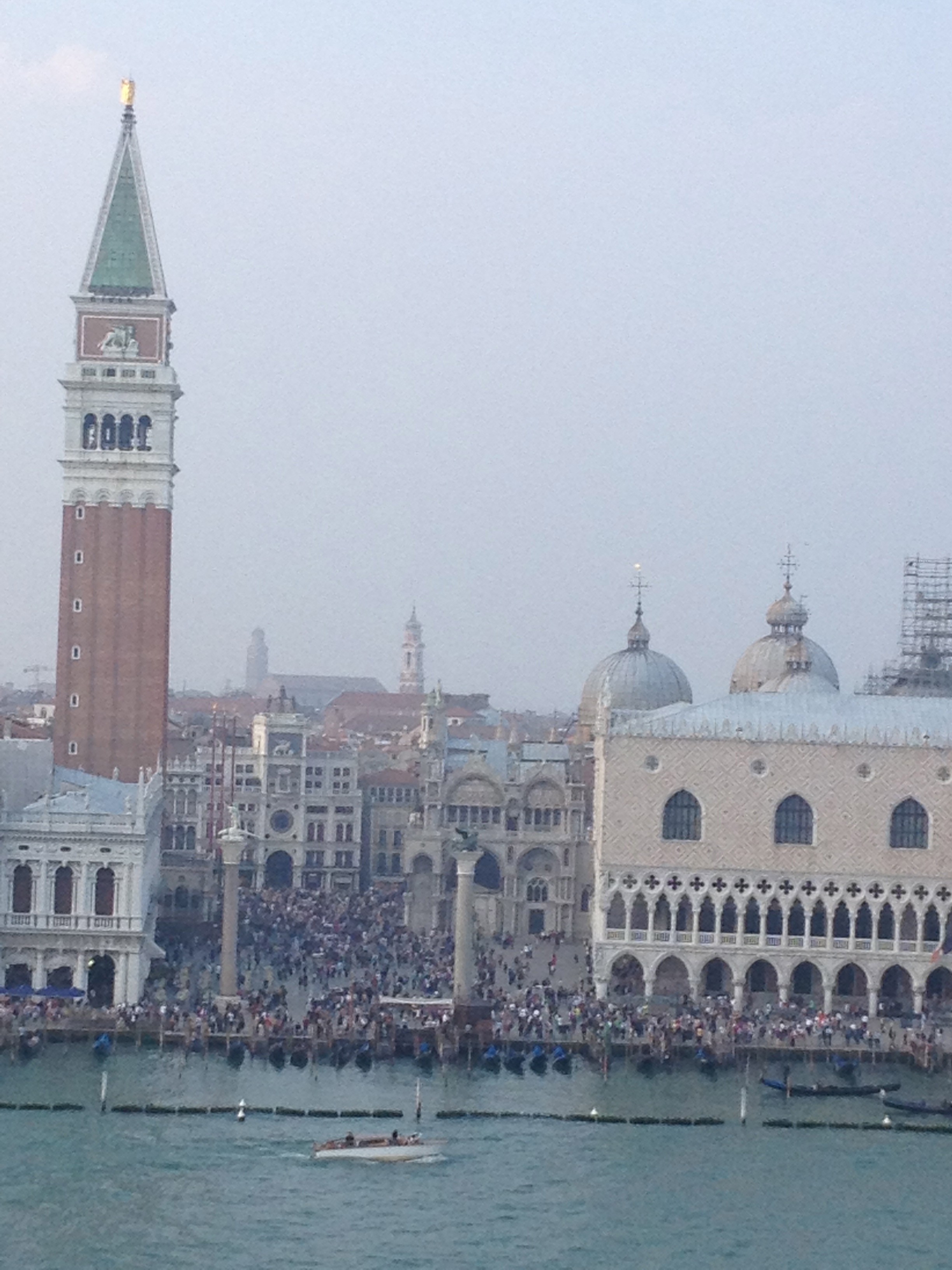 Who doesn’t love Venice? Oh, I know, if you visit in the hot summer when the crowds are clogging the Piazza San Marco–and even buying a scoop of gelato can set you back ten bucks–you might not fall in love with the city as passionately as my husband and I have.
 And yes, having espressos at Café Florian where Hemingway reportedly consulted his writer’s muse when staying there set us back $40 (and that was in October, no less!), but hey! I’m a published writer and I absolutely, positively had to sit in those chairs and look out at the same stunning vista he did.
 We were blessed with cool weather and went to all the tourist attractions as early as they opened and thus had a perfectly delicious time during our week in Venice last year, even as the Agua Alta was rising.
The city swiftly and expertly put up the boardwalks, and besides, I was reading a gripping Donna Leon mystery novel, Aqua Alta, in my Pensione Accademia each evening before the gently sloshing water in the canal outside my window lulled me to sleep. Long term, the city is in peril, but on this particular visit, it was an experience I’ll remember always…

It was also the perfect way to commemorate 35 years of marriage and a very BIG birthday for both my husband me last year. “A celebration of lions” I called it, adoring all the images of these regal creatures we saw everywhere throughout this water-laced city. We learned that if the lion had his paw on an open book, the Renaissance City State of Venice was at peace; if the lion’s paw was on a closed book, Venice was at war.

Our writer pal, Michael Llewellyn had been this route before us and eventually sent us wonderful images of lions that he’d captured with his “real” camera, in contrast to my iPhone 4.
 When we got home from our Grand Tour last fall and decided to launch our own, independent publishing enterprise, the idea of using the concept of the Venetian lion as our colophon (i.e. “logo”) to signify our company instantly appealed to everyone involved.
So we sent a couple of photographic images to our designer and look what Kim Killion came up with…our magnificent Lion’s Paw Press “King of the Beasts” has his foot on three books, not one. And author Llewellyn gave us the best compliment of all. “I wish I’d thought of doing that!”
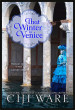
The icing on the cake is that Book 3 in my “Four Seasons Series” ( Book 1: That Summer in Cornwall, published in Feb of this year; Book 2: That Autumn in Edinburgh, due out next Fall) will be That Winter in Venice, set during the celebrated Carnivale season of exotic costumes and mist rising from the canals…
 It’s tough duty, but it seems we’ll just have to head back to La Serenissima in February of 2014 to witness Carnivale for ourselves. Research, you know…
Dateline: 200 Years Later…
May 2, 2013 by ciji · Leave a Comment
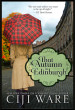
 I’ve realized recently, preparing for my trip to Scotland in June to research the second in the 4 Seasons Series ,that the next book—That Autumn in Edinburgh—may be the “ultimate sequel.” That’s because the story it continues, Island of the Swans, left off at the end of the eighteenth century. The new books starts in 2013! Crazy idea? Here’s how it happened…
Not too long ago, my husband and I were driving the two hours from the Bay Area to Sacramento to see our Godchildren and tossing ideas back and forth as the California scenery sped by. During the previous twenty-five years, I had written the words –The End–on seven 130,000 word historical novels, along with two weighty nonfiction books and was feeling, as my late novelist father Harlan Ware was wont to say, “that the well may be running pretty dry.”
 Like my dad, (seen on the right in a portrait by Donald Teague) I love reading as well as writing fiction, but producing historical novels to the standard I think the reading audience deserves takes a commitment of a couple of years, each, and I had hit a very significant birthday recently. To launch into another big project like one I’d been mulling over in the middle of the Great Recession would require living with no income during the time it took to produce the book, to say nothing of the expensive and extensive travel required to truly do the subject justice,
 And then there would be the huge struggle to get it traditionally published in today’s ever-changing and tumultuous media industry, not to mention the effort required to promote an historical novel set two hundred years earlier to audiences who were less and less likely to have studied history prior to World War II!
“I’m running out of runway,” I recall complaining to my writing pal, Michael Llewellyn. “The readers who like my stuff are as old as I am! Maybe I should hang up my spurs?”
Then a thought struck: why not write some sequels to those same historical novels, but set them in contemporary times? I was yearning to try a new direction in my writing life, but as a practical matter, the good news was that I already “knew the territory” of each book’s setting; knew the characters from whom their modern-day counterparts descended, and I grew excited to accept the challenge to develop stories that echoed down from the distant past.
 I have long been interested in the idea that events far back in a family’s line filter down and affect later generations. I’d seen this in my own family where my ancestors had originally sailed across the Atlantic from various parts of the United Kingdom to settle in the American colonies in the eighteenth century, pushing West in the nineteenth and twentieth centuries. My father, who’d never traveled to Europe, was nevertheless about as British as they come, serving tea each day, promptly at four o’clock. Why was that, I’d always wondered? Could having a cuppa be encoded in one’s DNA?
On my mother’s side, her four-times great grandfather and his son had been officers in the American Civil War on the Union side, captured at the Battle of Shiloh and put in a prison camp, and returned to Missouri broken, self-medicating men, with repercussions that were felt down through the generations—even to my own day.
 So, I wondered, why not tell the uncompleted story in my biographical historical novel, Island of the Swans. Reveal to the readers what ultimately happened much later in their lives between Jane Maxwell, the 4th Duchess of Gordon, and the “lost lieutenant” Thomas Fraser who had been reported killed in battle and came back to Scotland to claim her as his bride shortly after she was married to the Duke. How had Jane’s losing the love of her life impacted the Maxwell-Gordon-Fraser children? (Yes, there is quite good evidence that one of Jane’s offspring was not by the Duke!)

What if two descendants of the star-crossed lovers happened to meet in Edinburgh, Scotland in the first decade of the twenty-first century and–
And thus, as with That Summer in Cornwall, a modern-day sequel to an historical novel is born: That Autumn in Edinburgh. So watch this space…
Mother’s Day Kudos to “Storytelling Moms”
April 29, 2013 by ciji · Leave a Comment
 Recently my son sent me this wonderful photo of my daughter-in-law reading to our two grandsons. As an author myself, and the daughter, granddaughter, and niece of professional writers, I say hats off and a huge thank you to all the “Storytelling Moms”–and Dads–who take the time to share their love of literature with the next generation.
However, Mother’s Day is upon us on May 12th, and this is by way of honoring the women in children’s lives who offer writers like me the inspiration to just keep typing! So here’s my heartfelt tribute to women like…
 …our country’s First Lady. Not only has Michelle Obama used her own Bully Pulpit to urge us to be mindful of healthy eating, she has been tireless in her promotion of literacy and the joys—and necessity—of reading to our kids.
And let’s remember to show our gratitude to the women across the country that not only read to their own children, but—as teachers—read to nation’s children nearly every day in the classroom. For youngsters who may not have anyone else in their lives taking the time to read to them, these are the people who often provide the spark that ignites a lifetime of literacy.
 I also appreciate the celebrity moms like the singer Madonna who show by example that reading to their kids can never begin too early…or stop too soon.
Reading to children has been around along time, of course. Just have a look at this wonderful portrait by the American painter Mary Cassett (1844-1926) who created a number of lovely images of women with books in their hands, surrounding by young ones. A friend of Edgar Degas and other French Impressionists, Cassett emphasized the intimate bonds between mother and child and she did a remarkable number of works that are variations on this theme.
 So on this upcoming Mother’s Day, let us pay homage to all mothers (fathers and grandparents, too) who consistently read to their offspring–and even to their canines, as you see here with First Dog, Bo!
Not only do they create the readers that authors like me aspire to please, but their efforts most often result in the molding of that most wonderful creation: a literate human being!
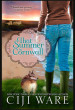
That Summer in Cornwall is Ciji Ware’s latest novel that deals with good moms—as well as the other kind…
Creating Characters: Their Actions Drive the Plot!
April 25, 2013 by ciji · Leave a Comment
 Next time you look at a row of books on a shelf, think of how the authors of these novels had to figure out what was going to happen in these stories to keep you turning the pages—in other words: the plot.
When I was in the process of planning out my next novel, That Summer in Cornwall, which is a stand-alone sequel to A Cottage by the Sea (a book I’d written a decade before), I remembered the words of a very experienced storyteller that once said, “What do your characters want, and what are they willing to do to get it?”
After going the distance on six 100,000-word-plus novels, I finally get it: doing something to get what a person wants implies action…and action and conflict are elements that drive a plot.
It’s not that complicated, when you think about it, but figuring out what “they” are willing to do to get what they want requires imagination, for we all know that people will do all sorts of things—either admirable or despicable–to get what they want. It’s the author’s job to figure what a character would do, depending on—well—their character…what sorts of folks they are. (We can take up the all-important “biographical sketch” many authors write, early on, in another blog post here…)
 Meredith Champlin, the heroine in blue jeans and Wellington boots, basically wants to re-boot her life. With her service dog, Holly, trotting at her side, she escapes a dead-end relationship with a charming but alcoholic rodeo rider, along with her grueling job as a pediatric emergency room nurse at a children’s hospital in Wyoming to spend a few months at the “Money Pit” belonging to her cousin who has married an impecunious British landowner with a castle and an estate that is reeling from the current economic crisis.
Added to that, Meredith, who ran a pet therapy program at her hospital, wants to help raise much needed cash by founding the Barton Hall Canine Obedience Academy, to say nothing of trying to turn her computer-addicted, eleven-year-old “Beverly Hills Brat” legal ward–whose mother has just died in a plane crash–into a decent human being.
And what does the hero want?
 Simple. To be left in peace–far from the woman who betrayed him before he departed for Afghanistan as a member of the Royal Army’s bomb squadron—and to avoid his mother who lives in a Cornish village near the castle, a woman who virtually abandoned him and his two brothers when they were young. Now a newly-minted veterinarian and large farm animal manager, the only living creature he likes and trusts besides his employers is his Border Collie, T-Rex, who is his partner on the local Cornwall Search and Rescue Team.
And what do the canines want? To stay as close together as possible, which is how the two protagonists in That Summer in Cornwall meet in the first place!
See how this works? Ask what the main characters seek, and the rest practically takes care of itself!

The hard part, of course, comes when the author has to start typing….