Creating Characters: What Do They Want?
April 22, 2013 by ciji · Leave a Comment
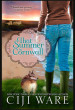
 When I originally had the notion for That Summer in Cornwall, my plan was to have my heroine, arriving in late May at shabby chic Barton Hall from Wyoming, get involved in the nursery business that had saved her cousin’s family mansion from bankruptcy a decade earlier in the prequel, A Cottage by the Sea.
 However, Meredith Champlin, an emergency room nurse at a children’s hospital, is no gardener like her cousin, Blythe Barton Teague. She was born and raised on a western sheep ranch, so I began to ruminate on what her life goals and desires might be, recalling what a wise person in the writing business once said. “Ask what your characters want—and what would they be willing to do to get it!”

First I had to ask myself: what elements are common both to Wyoming and Cornwall? The latter is a place where many immigrants came to the American West from Britain’s tin mines and fields to work in the copper and coal mines in Pennsylvania, Wyoming, and Montana and till the vast open stretches of land, raising animals for the nation’s food supply in the years following the pioneer days.
 Cattle and Sheep need herding, I thought, which meant dogs. Meredith, 35, is a pediatric nurse, so what if she had raised Corgi herding dogs as a rancher’s daughter, and also developed a pet therapy program at her hospital?
Bingo! Corgis are known as “The Queen’s Dog”—so obviously they would exist in Cornwall, too, especially because a lot of sheep are raised in the beautiful fields and on the moors in the West Country.
So, I had the answer to “what does Meredith want?” She wants to be deeply involved in the world of working dogs and would never leave her beloved Corgi, Holly, behind when life’s circumstances land her six thousand miles from her home. It was a natural fit that she could help keep Barton Hall solvent by founding the Barton Hall Canine Obedience Academy on the castle grounds.
 And what about her past? She also wants to forget an unhappy love affair with a charming, alcoholic rodeo rider and forge an entirely new life away from injured and dying children after a decade of intense, worthwhile, but exhausting service. In other words, she wants a new beginning and a way of re-inventing herself and her life’s work.
And as it happens, in Cornwall, working dogs are also trained in the field of search and rescue, due to the type of terrain where “holiday makers” routinely fall off cliffs that skirt the dramatic coastline facing the English Channel, or get lost on the remote moors, or disappear down deserted mine shafts left over from the previous century’s tin industry.
 Then one of those “Eureka!” thoughts struck. The hero could be a veteran of a dog bomb-sniffing unit in the British Forces, late of Afghanistan, who, along with his Border Collie T-Rex, has returned to Cornwall and is now a veterinarian and a member of the Cornwall Search and Rescue Team. All he wants is to be left alone to nurse his psychic wounds that vastly predate his service in the Royal Army, though at his core, he yearns for a sense of safety, connection with kindred spirits, and “home.”
So, through the magic of asking (and answering) “What do the main characters want?” I could begin to write Chapter One of That Summer in Cornwall.
The question “What are the characters willing to do to get what they want?” is the engine that drives the plot…a subject that I will probably discuss another time for readers who speculate about such things. It’s a subject I am certainly wondering about as I prepare to start work on That Autumn in Edinburgh..a sequel two hundred years after the conclusion of my first novel, Island of the Swans…
Tea Addiction in Fiction
April 18, 2013 by ciji · Leave a Comment
 There must be a “tea gene” running through the Ware and McCullough clans, because I’m pretty sure there’s a scene where someone is making, delivery, pouring, or drinking tea in every single one of my seven works of fiction…
In That Summer in Cornwall there must be about a half dozen such scenes, and in each one, I try to recall some wonderful repast that included tea, scones, cucumber sandwiches, smoked salmon, and—gasp—even little cream puffs.

I think it all began with my father, Harlan Ware, a mid-century writer of novels, screenplays, short stories (remember The Saturday Evening Post, anyone?), and—for fourteen of its twenty-seven years on the air, the radio drama One Man’s Family set in Sea Cliff, San Francisco, not too far from where I live.

The Barbour Family in that show was always discussing “life” over a cup of tea…but, of course, listeners only heard the clinking of the chinaware, courtesy of the sound engineer baffled behind the sound-proof screen in the old NBC studios.
 When I was growing up in Carmel, California, my father and I would walk the length of the beach at four o’clock when I got home from school and he’d finished his daily script…and then go home for a “nice cuppa.”
The strange thing was that my dad had never set foot outside the United States, but he was as British as any Londoner, and having tea between four and five o’clock every day was just one example of the strength of his family origins tracing back to Devon and Cornwall.
And now, I, along with many of my closest friends, are likewise addicted to teatime. In my case, however, I am very likely to inset a scene—or two or more—into my fiction where the characters find themselves discussing life, love, and whatever problems they are having over a nice, strong amber brew.

So perhaps I can persuade you one day soon, to cozy down with a good novel, put your feet up, and enjoy a cup on me?
Dogs as Characters in Fiction
March 29, 2013 by ciji · Leave a Comment
 I often am asked, “Do you base some of your characters on real people?” Well, fictional characters are just that: made up in the author’s mind. However, there’s no denying that there are often ‘real life’ figures who sometimes serve as inspiration. And, as I learned this year writing That Summer in Cornwall, the same goes for dog characters.
However, just to show how tricky a subject this is, you should know that this Border Collie actually is known by another name as a ‘real-life’ member of the Cornwall Search and Rescue Team… In my novel, the Border Collie T-Rex–aka Rex–became the name I gave my hero Sebastian Pryce’s dog after I met this dog, seen here having coffee at the famous Poggio’s Trattoria .
Say hello to the real T-Rex…the Great Dane, affectionately known by his intimates as “The Mayor” of a maritime village in the San Francisco Bay Area. This big boy truly was what inspired my naming this important search-and-rescue dog who figures prominently in the novel.
(Well…at least, both boys’ coats are black and white).
 And both animals have tremendously good hearts—to say nothing of their amazing noses—and, of course, I asked permission of the original T-Rex’s mistress, artist Lucinda O’Connell, if I could “borrow” his moniker.
And then there was the heroine’s dog, a sheep-herding Corgi from the pastures of Wyoming. The sassy, smart little dog started out in the first draft with the name of “Jasper”—called that in honor of my godchildren’s ‘real-life’ Corgi.
But there was just one problem: Jasper the Corgi is a boy dog with a boy dog’s name, and as I got into the plot, there were some very compelling reasons to make “him” a “her”—especially since the two dogs have a memorable “meet-up” in Chapter One—much to their human companions’ chagrin.
Therefore, in urgent need of an appropriately feminine name, the first thing that popped into my head was my friend, romance writer Cynthia Wright ’s late, great black lab, seen here with her daughter, Jenna. So “Jasper” was transformed, via a “global search and replace” on my Mac, into “Holly”– along with profuse apologies to my godchildren Andrew and Grace.

So, there you have it! Life in the fictional world can be just as rough as Hollywood…and some of the best performers are left on the cutting room floor…
Spring Comes to Cornwall
March 22, 2013 by ciji · Leave a Comment
 Where I live in a waterside village on the San Francisco Bay, gardening enthusiasts exalt when we get a dose of nice, steady rain as we did this week. “Oh, it’ll be so good for the garden!’ they say with broad smiles–and sure enough, everything around here is starting to burst forth.
However, secretly I’m saying to myself, “But you should see what’s probably happening in Cornwall, England right about now!”
 On my multiple trips to the West Country (as it’s known locally) to visit our English relatives and research both A Cottage by the Sea and its just-published, stand alone sequel, That Summer in Cornwall, I have seen magical Cornish gardens that make even Black Thumb types like myself swoon with envy and admiration.
  If you need any convincing, just check out The Great Gardens of Cornwall “…home to a wealth of the most exciting, rare and beautiful plants and trees in the British Isles.” Thanks to the sweeping presence of the Gulf Stream, even palm trees grow in Cornwall…to say nothing of the m flowing plants.

There had to have been true creative genius among the early nineteenth century Cornish garden owners, for they had such a hunger and passion for the exotica, they put up fortunes of money to sponsor what can only be termed “The Great Victorian Plant Hunt,” bringing back to Cornwall the first rhododendrons, camellias, hydrangeas, and all manner of botanical curiosities, including palm trees.
The result of sending their minions—and sometimes trekking themselves—to far-flung places such as China and South America on expeditions that brought back to Cornwall seeds and plants has been that, some hundred and fifty years later, travelers can see some amazing examples of what one brochure calls “wild and magnificent living theatre.” 
 At Caerhays Castle, the model for “Barton Hall” in That Summer in Cornwall , rhododendron plants put in the soil there a hundred years ago have now grown toweringly tall.
Even many private gardens, along with the beauties run by The National Trust, are open to the public on specific days during the year—and especially in April and May when the plant world in the West Country of England runs riot with color…
So, next time you’re feeling afflicted with a big dose of spring fever, plan a trip to Cornwall…
…or if that’s not in the budget, cruise around the websites listed above–and just feast your eyes…

To Celebrate St. Patrick’s Day: Bake a Scone!
March 15, 2013 by ciji · Leave a Comment
 These past months working on the now-published That Summer in Cornwall and starting the research for That Autumn in Edinburgh–which will be published next fall—has stirred up so many memories of my own family history.
This week, as St. Patrick’s Day approaches, I thought a lot about my own Scots-Irish-Cornish heritage and it got me longing to make a fresh batch of “Elfie McCullough” scones. (That’s her in the b&W photo)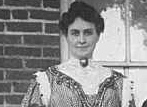 SO! Here, below, is my Great Grandmother, Elfie McCullough’s recipe handed down by my Great Aunt Marge and adapted by me over the years. (This is Aunt Marge in white with my McCullough clan at one of my book-signings in New Orleans fifteen years ago).
My father’s family–the Wares– originated on the border of Devon and Cornwall in England, and migrated in 1642 to Massachusetts and eventually to the mid-West, where my father was born.

My mother’s family–the McCulloughs–were Scottish who left Ayrshire to work as estate factors in Northern Ireland and eventually landed in the Tidewater region of America in the late 18th century. They made their way to Missouri where they raised Hereford cattle and were fabulous cooks! I was 15 when Elfie died and a grown woman when Aunt Marge passed away, in her nineties.
Marge wouldn’t share this recipe unless I promised to use “real butter.”
So, here’s to St. Patrick’s Day with a Scottish-Irish-Cornish “hybridized” scone recipe–from the United Kingdom via America! (If you can’t cut-and-paste this off your screen, email me via the Contact page and I’ll send you the file).
CIJI’S SCOTS-IRISH-CORNISH FAMILY SCONE RECIPE
Preheat oven 425 degrees. This recipe makes about 6 to 8 scones, depending on how small you make them.
1 cup Self Rising Flour (be sure it is fresh)
½ cube Butter (either salted or unsalted is fine)
¼ cup Sugar
¼ cup Heavy cream (or milk)
1 egg yolk beaten with a little milk
Sift or mix the flour and sugar together in a medium-size bowl.
Hand cut butter into flour and sugar with a pastry cutter, until crumbly–but do not over work.
Add enough milk (I use cream if feeling naughty) to make the dough ball come together (this will vary according to your level of humidity, but don’t use too much or the scones won’t rise much; I use a wooden spoon to mix together, then my clean hands to make the dough come together).
Turn dough out on floured surface and pat into a round or square shape with your hands, ½ inch to 1 inch thick, depending on hall high you want your scones. (I like 1 inch tall dough).
I use a round cylinder, 2 inches in diameter, to cut the scones, or you can just use a knife and make triangles. Your choice. Put on jelly roll pan or cookie sheet, non greased. Brush the tops of the scones with the egg yolk/milk mixture.
Bake for 12 minutes until lightly brown. When cool, split the scones if you made the high ones. Serve with a dab of whipped cream, clotted cream, or crème fraiche and a dollop of your favorite jam.
Enjoy! And by the way, Great Grandmother Elfie McCullough and Aunt Marge send their regards….