Can Readers Love a “Flawed” Hero?
September 12, 2010 by ciji · Leave a Comment
When I was first conjuring the characters in Wicked Company and mulling over how I would weave both fictional and historical figures into the story of an 18th c. woman playwright fighting to get her works written and performed at London’s Theatre Royal, Drury Lane, I thought about some of the men of that era whose lives clearly could be fodder for a novelist’s imagination and well as an historian’s.
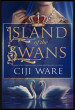
 Take the 18th c. poet Robert Burns, for example, who figured in my first historical novel, Island of the Swans. He was an astonishingly good-looking man, from all accounts and surviving pictorial representations. He also had a reputation for loving the ladies–some of whom were not his wife–and according to the research, there was much gossip surrounding his relationship with my heroine, Jane Maxwell, the 4th Duchess of Gordon.
However, my reading of the facts was that the duchess supported his artistic endeavors, helping to get his first book of poems published in Edinburgh, but held him at arm’s length. Thus, he was not the “hero” in the novel and so I avoided the issue of whether readers can appreciate a lead character who actually lived on this planet, and yet could not be described as a “man of moral character.”
It is part of the territory when writing historical fiction that there is constant tension between creating a compelling story and balancing the historical facts as best we are able to determine them. Readers of novels tend to want their heroes “heroic”–unless they are lovable “anti-heroes,” which can sometimes work but is very tricky to pull off. For me, I enjoy working through the flaws as the story’s arc shows the characters growing and changing while the novel unfolds.
However, sometimes a character is fascinating, but simply not “hero” material to my way of thinking. For instance, in Wicked Company, Richard Sheridan of The School for Scandal and The Rivals fame was a contemporary of my composite heroine, Sophie McGann, a female character drawn from the biographies of several working women playwrights of the day. However, Sheridan had a character flaw that I couldn’t stomach. Yes, he was a compelling gent, not too bad looking as you see here, and of course, a prodigious talent , but in my research I concluded that he basically “borrowed”–with no credit–the famous Mrs. Malaprop character in The Rivals from one his own mother had originally created in a play that failed to pass the censor in the Lord Chamberlain’s office! Interesting, yes. A hero in my book, NO!
In the end, I created a fictional hero, Hunter Robertson, to go with my fictional heroine, but he, too, is noted for his lapses.  Most notable among them is a fair amount of emotional baggage carried over from his youth that prevents him, early in the novel, from seeing what is obvious to the reader: that he and Sophie are destined for each other–a state of affairs he ultimately begins to comprehend when they both become involved in the theater in the beautiful spa city of Bath where, believe it or not, in the 18th c. there were co-ed bathing facilities! (Note the lady holding on to her hat in the upper right of the image).
But to a writer, those flaws Hunter possessed were what kept the writing interesting for me, especially when they’re rooted in conflicts and tragedies going back to a period of his childhood he wanted to forget: a time when his mother chose which of her children to give the meager supply of food during “the starving” in the Highlands of Scotland that came in the wake of the failure of Bonnie Prince Charlie to claim the thrones of England, Scotland and Wales.
I love Hunter Robertson–flaws and all–and I think readers will too, knowing on some level that he will eventually come to terms with his difficult past, recognize Sophie for the valiant, gifted woman she is, and fall madly in love with her. Until that happens, his role is to save her from herself (and her hot temper), as well as find his own path as a creative talent in the boisterous, turbulent London theater world.
For me, heroes are more interesting if they’re not perfect and totally “heroic,” straight out of the gate. Perhaps this is what keeps readers interested in the mystery of how in the world Hunter and Sophie are going to overcome the obstacles facing a “two-career couple” in the eighteenth century!
Truly, nothing much changes, despite our claim to modernity.
Outfoxing “That Little Toad!” Edward Capell, Censor
September 5, 2010 by ciji · Leave a Comment
There is nothing more delicious for an historical novelist than to run across a generally unknown figure in history who is a person to be thoroughly disliked, as with Edward Capell, an 18th c. play censor in the Crown of England’s Lord Chamberlain’s office.
 From all accounts, he had a very high opinion of his own intellect–perhaps deservedly so, as he was considered an expert on the works of Shakespeare and was often asked to authenticate various manuscripts. However, he held the lowest opinion imaginable of a mere woman attempting to earn her living by her pen. Thus, any woman playwright trying to get one of her works past this disapproving bureaucrat and granted a license to be performed on a professional stage in London or elsewhere in the Kingdom faced frustration bordering on the urge-to-kill.
Edward Capell could end any writer’s career with a stroke of his pen, but he apparently took special delight in blindsiding “uppity women,” including a number of woman writers who ultimately took refuge in using male pseudonyms to try to get past his overt prejudice against them.
The “cameo” image on the left is highly flattering, for in life, he was an odd little man, with a penchant of eating foods only the color white! He’d eat mashed potatoes or parsnips, but never orange carrots. He’d consume white cheese, but never cheddar; white wine, but not claret. Such was his odd phobia of foods of vibrant hues, that the lack of vitamins in his diet soon produced scrufulous skin disorders, making his appearance behind his desk at the Lord Chamberlain’s office quite a terrifying sight to behold.
Fortunately, there were a number of clever women writers who managed to get their works approved for production by one means or another, including Frances Sheridan, mother of the far more famous playwright, Richard Sheridan of The Rivals and The School for Scandal fame. Frances, seen here on your right, had a dreadful time running the gauntlet of the Lord Chamberlain’s office, though she managed to see her The Discovery and The Dupe produced under her own name at Drury Lane by David Garrick, the immortal actor and manager there whose fame continues to this day.
Garrick, as you will discover if you read my forth-coming Wicked Company was the best friend an 18th c. woman playwright would ever find, and chroncling his brilliant handling of the dreaded censor, Edward Capell, was one of the most delightful experiences I ever enjoyed as an historical novelist.
 When my heroine, Sophie McGann, comes storming into his office shouting, “Oh, how I despise that little toad!” having just learned that Capell has refused her latest play a license, Garrick kindly pats her on the arm and replies, “Well, my dear, we must then simply out fox him. Now, here’s my idea…”
Wicked Company‘s publication date is October 1 and, hopefully, will be in the books stores a bit before that. I hope you’ll love to “despise that little toad” Edward Capell as much as I did!
A “Petticoat Playwright” Wannabe
August 29, 2010 by ciji · Leave a Comment
 In the late 1980’s, just about the time I had finished researching and writing my first historical novel, Island of the Swans, I stumbled across a reference to a minor character I’d included in the book , the sister of the heroine, Jane Maxwell, 4th Duchess of Gordon (1749-1812). I discovered that the duchess’s younger sibling, Eglantine, Lady Wallace, not only enjoyed playing the harp for guests in her home, as you see here, but also penned three plays.
One, The Ton: or, Follies of Fashion was produced in 1788 to a distinct lack of success at London’s Covent Garden theater; the second, The Whim, was forbidden a license by the official censor in the Lord Chamberlain’s office; and the third, an adaptation from a French play, Diamond Cut Diamond, suffered a fate that has been lost in the mists of time. Frankly, I was amazed to have learned that women were writing plays for London’s finest theaters during the 18th c.–many under their own names, as was the case with Lady Wallace for The Ton.
I remember walking into the Rare Book room at the Huntington Library in San Marino, California, where I held a Readership in 18th & 19th c. British-American History, and putting in three call slips, certain these obscure manuscripts were only to be found in a dusty corner of some library in London. (No books circulate outside these types of research libraries, so you can see how many tomes began to pile up on my desk as time went on with this project!)
Much to my shock, the Huntington had all three plays! Not only that, they had scores more dramas and comedies written by eighteenth century women playwrights because more than seventy years before, Henry Huntington’s acquiring agents bought the Larpent Collection of plays from the heirs of a long-dead censor in the Lord Chamberlain’s office, the bureaucracy that, up until the early 1960’s, determined which plays could be presented in Britain.
In fact, in the course of researching and writing Wicked Company, I learned that there were a hundred women playwrights in Britain and America who saw their works produced on professional stages between 1660 and 1820. While in London, I had the pleasure of back stage tours of the latest “editions” of Covent Garden and Drury Lane theaters (both places have burned to the ground several times due to the candles used to light the proceedings prior to the invention of electricity).

That moment when I held a copy of Eglantine, Lady Wallace’s failed play in my hand marked the start of a three-year odyssey to discover professional women playwrights whose works were produced to great success–unlike poor Eglantine–at the theatres royal, Covent Garden and Drury Lane, an image of the latter you see here.
Finding the failed plays of this “petticoat” playwright wannabe also provided the avenue that eventually led me to Edward Capell, a strange little functionary who had the absolute power to end the writing careers of these professional women playwrights with the stroke of his pen. Capell was destined to become one of the most intriguing “villains” I’ve ever had the pleasure to create!
But more about this mean, spiteful little toad next time…and I’ll even post an image of what he looked like…
Wicked Company, by the way, will be in bookstores in October, courtesy of Sourcebooks Landmark, and I can’t wait!
A Tale of Two Covers
August 8, 2010 by ciji · Leave a Comment
Anyone who follows the publishing business knows what turmoil the industry has been experiencing since the Dawn of the Digital Age changed all the rules and even the game itself. Nowhere is that upheaval more likely to be felt than in the marketing of books.
I’ve been a frontline witness to this recently. Last Spring I was sent the new cover for Wicked Company, the October Sourcebooks Landmark release of a novel that’s very dear to my heart because it’s about writers; specifically women writers struggling to make their way in the boistrous, bawdy 18th c. world of the famed Drury Lane and Covent Garden theaters. Between 1660 and 1820, there were at least one hundred “petticoat playwrights” who saw their works mounted on the professional stage–many writing under their own names. As an author rather obsessed with the question “what were the women doing in history?”, to me, these amazing artists were perfect fodder for an historical novel.
 The cover on the left was sent for my approval last spring and I loved it. The image was an adaptation of the famous Sir Joshua Reynolds portrait of perhaps the most celebrated 18th c. actress-manager in England, Sarah Siddons. Huge in size and grand in scope, it currently hangs at the Huntington Art Gallery in San Marino, California, where I spent several years researching Wicked Company.
Then a funny thing happened on the way to publication day for the new edition: some very key people in the process of getting the book to market had second thoughts about the cover, so back to the drawing boards they went to see if they could both capture the era, as well as reflect a less “static” feeling in presentation, as one book buyer put it.
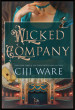
The final cover is now this you see on the right:  showing a slightly mysterious image of an actress on stage in period dress, framed by red velvet drapes and also sporting the shield that has become a welcome “signature” for this series of my books.
I cannot deny the cover switch hasn’t required some adjustment, as I’d already put it on my new website and was quite pleased about the way it harmonized with the other Sourcebooks Landmark covers in the new series. However, I realize that those professionals who specialize in bringing historical novels to their audiences in this sometimes perplexing digital revolution may know much more about the business of “packaging” and “buyer appeal” than I do, and are wise in the ways of trends in the evolving industry.
Thus, I remain grateful to the talented designers at my publishers who have now created two attractive covers for Wicked Company, and I leave it to the readers of this blog to decide which of the images attracts them the most to a book that was such a joy for this author to write. The cover on the right is the one that will appear in the bookstores, but you, faithful reader, now have the inside scoop on why you may have seen Sarah Siddons vanish back to the eighteenth century.
It’s a new world out there in publishing with books now also available on Kindle, iPad, Nook, and Sony readers, as well as the old fashion volumes made from paper that you can hold in your hands and turn the pages–while soaking in a bathtub!
Let me know what you think, both about the book’s cover and its contents…
How I Became a “Scot-O-Maniac”
July 19, 2010 by ciji · Leave a Comment
 My passion for Scottish history and culture began in my mid-thirties. I was then working as a reporter and commentator for ABC Radio and TV in Los Angeles and was handed the assignment of covering the International Gathering of the Clans which brought members of the Scottish Diaspora from all over the world to Edinburgh. As I’ve mentioned previously in this blog, both my husband and I are of Scottish-American heritage (Here we are on a moor at the Lord Hamilton shooting estate in Glen Affric, the Scottish Highlands). Between us are the family names of McCullough, McGann, McAlister, Alexander, Bell, Harris and Hunter in our family tree. Read more