Scotland on my Mind: Then & Now
April 11, 2013 by ciji · Leave a Comment
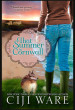
 Now that I have launched That Summer in Cornwall, I was astounded to realize about two months ago that I began the research for my first novel, Island of the Swans, exactly thirty years ago this summer! It was also my first historical novel—a fictionalized retelling of the life of the amazing eighteenth century figure, Jane Maxwell (1749-1812), 4th Duchess of Gordon, about whom—I soon discovered–no full-length biography existed.
I was such a novice, it never occurred to me that merely ferreting out the details of both her public and private lives was a book in itself, let alone the task of teaching myself–a nonfiction writer at that point–how to create a novel!
So why choose Jane Maxwell? Well, not only did she marry the largest landowner in Scotland, though passionately in love with someone else; wed her five resulting daughters to the dukes of Manchester, Richmond, and Bedford, the Marquis of Cornwallis, and a baronet named Sir Robert Sinclair—she also served as flamboyant hostess to Prime Minister Pitt, the Younger, during the Madness Crisis of George III—AND….
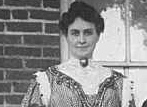 …my great-grandmother, Elfie McCullough, who lived into her 90’s, swore to my mother on the family Bible that our McCulloughs of Ayrshire–poet Robert Burns country–had married into the Maxwells of Monreith a generation or so before the future duchess was born, “making you, my dear, a direct descendant of a duchess!” (I tried, but trust me, I could never prove this without a shadow of a doubt).
Even so, I grew up on stories that the beautiful Jane, a powerhouse of a woman like Elfie herself, was also celebrated for recruiting on horseback fellow Highlanders into her brother’s regiment that fought for the British in the American War of Independence and surrendered with their Commander, Lord Cornwallis, to George Washington at Yorktown.
 Now, I freely admit that during the 1980’s I became rather obsessed with Jane’s life, even performing some of my lectures about my heroine dressed in full court regalia. In the course of more than six years researching and writing and selling this version of “Gone with the Wind of Scotland”– a story of Jane loving one man, a soldier reported to have died in the American Colonies, and marrying a duke, only to discover her lieutenant had not been killed as reported– my husband took to calling me his very own, little “Scot-o-Maniac.”
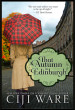
Recently, I discovered that in the years following Jane’s death, a member of the Maxwell Clan married into a Lowland family by the name of Scott—as in the famous Scottish novelist, Sir Walter Scott. This little historical nugget immediately triggered an idea for a contemporary sequel (to be titled That Autumn in Scotland as part of my forth-coming 4 Seasons Quartet series), set two hundred years later than Swans.
 What if, I mused one day in early February this year, a female American relative of the “lost lieutenant” (who had eventually abandoned Scotland at the end of the eighteenth century to settle in the Mid-Atlantic Colonies), met by sheer chance a male member of the Maxwell clan on a tour of Abbotsford, the famous baronial mansion owned by Sir Walter Scott?
And what if the pair discovered during the course of that autumn that they were direct descendants of the star-crossed lovers and were driven by curiosity and a growing attraction to each other to unravel the tale of what eventually happened to Jane and the man she could never stop loving?
From such questions a hundred thousand word novel can spring…
…and so, after three decades, it’s back to Scotland…but this time, not the Highlands, as seen here in 1983, but rather the Scottish Lowlands, land of my own Clan McCullough forebears, even if I can’t (yet) claim a “direct” connection to my eighteenth century heroine.
 Tony and I are off in June to explore the modern Scotland of tartan mills competing with the Chinese knock-off artists, castles whose land-poor owners can barely keep their heads above water, and some cultural changes that I like to imagine my savvy Duchess Jane would somehow take in stride.
If These Castle Walls Could Talk…
April 5, 2013 by ciji · Leave a Comment
 There are travelers who will tell you, “You’ve seen one castle, you’ve seen ‘em all,” but when I’m in the throes of constructing a novel set in Great Britain, castles seem to me as important as “characters” as any of the humans that populate my stories.
Each of these fortresses has its own, specific story to tell: who built them and why? What were they trying to protect? Who was born here; who died here? And most importantly…who loved—or hated—their fellow inhabitants here?
Call me the Ultimate Romantic, but over the years of researching my various historicals, I sometimes think that the stones  whisper their tales…if the traveler can just remain quiet enough to hear what they have to say.
 I felt that “presence” of those who had come before so vibrantly at Caerhays Castle, the turreted stone edifice that was the model for “Barton Hall” in That Summer in Cornwall. It’s round towers and views of the English Channel and the lonely lookout cottage on the property’s cliff conjured up a story that practically told itself.
Now that I’m in the midst of the preliminary research for That Autumn in Edinburgh which will focus on the descendants—one Scottish, one American—of the star-crossed lovers in my first novel, Island of the Swans, I find myself also plotting my trip to the Scottish Border territory south of Edinburgh.
Here I’ve set up an interview with the man who has spearheaded the mulit-milion dollar refurbishment of Sir Walter Scott’s Abbottsford where I’ve recently discovered the novelist’s family were intermarried with descendants of Jane Maxwell, 4th Duchess of Gordon, the heroine of Island of the Swans whose clan once inhabited this ominous turreted fortress on the right.
 And then there’s Ayton Castle, the forerunner of the now-destroyed Ayton House where Jane received a letter a month following her arranged marriage to the Duke that the great love of her life had not died in an American Indian skirmish outside Fort Pitt, Pittsburgh, and was coming home thinking to claim her as his own.
Knowing this story, how would a modern Maxwell male descendant, struggling to keep a traditional tartan mill afloat–along with a Fraser, visiting from America in an attempt to recover from a tragic loss of her own– feel as they walked the banks of the River Eye on the exact spot where Jane learned of her lover’s survival, far too late for her to find lasting happiness with Lieutenant Thomas Fraser?
Asking a simple question like that…and listening intently to the standing stones and rustling wind might easily spark a writer’s imagination…
To Celebrate St. Patrick’s Day: Bake a Scone!
March 15, 2013 by ciji · Leave a Comment
 These past months working on the now-published That Summer in Cornwall and starting the research for That Autumn in Edinburgh–which will be published next fall—has stirred up so many memories of my own family history.
This week, as St. Patrick’s Day approaches, I thought a lot about my own Scots-Irish-Cornish heritage and it got me longing to make a fresh batch of “Elfie McCullough” scones. (That’s her in the b&W photo)SO! Here, below, is my Great Grandmother, Elfie McCullough’s recipe handed down by my Great Aunt Marge and adapted by me over the years. (This is Aunt Marge in white with my McCullough clan at one of my book-signings in New Orleans fifteen years ago). 
My father’s family–the Wares– originated on the border of Devon and Cornwall in England, and migrated in 1642 to Massachusetts and eventually to the mid-West, where my father was born.

My mother’s family–the McCulloughs–were Scottish who left Ayrshire to work as estate factors in Northern Ireland and eventually landed in the Tidewater region of America in the late 18th century. They made their way to Missouri where they raised Hereford cattle and were fabulous cooks! I was 15 when Elfie died and a grown woman when Aunt Marge passed away, in her nineties.
Marge wouldn’t share this recipe unless I promised to use “real butter.”
So, here’s to St. Patrick’s Day with a Scottish-Irish-Cornish “hybridized” scone recipe–from the United Kingdom via America! (If you can’t cut-and-paste this off your screen, email me via the Contact page and I’ll send you the file).
CIJI’S SCOTS-IRISH-CORNISH FAMILY SCONE RECIPE
Preheat oven 425 degrees. This recipe makes about 6 to 8 scones, depending on how small you make them.
1 cup Self Rising Flour (be sure it is fresh)
½ cube Butter (either salted or unsalted is fine)
¼ cup Sugar
¼ cup Heavy cream (or milk)
1 egg yolk beaten with a little milk
Sift or mix the flour and sugar together in a medium-size bowl.
Hand cut butter into flour and sugar with a pastry cutter, until crumbly–but do not over work.
Add enough milk (I use cream if feeling naughty) to make the dough ball come together (this will vary according to your level of humidity, but don’t use too much or the scones won’t rise much; I use a wooden spoon to mix together, then my clean hands to make the dough come together).
Turn dough out on floured surface and pat into a round or square shape with your hands, ½ inch to 1 inch thick, depending on hall high you want your scones. (I like 1 inch tall dough).
I use a round cylinder, 2 inches in diameter, to cut the scones, or you can just use a knife and make triangles. Your choice. Put on jelly roll pan or cookie sheet, non greased. Brush the tops of the scones with the egg yolk/milk mixture.
Bake for 12 minutes until lightly brown. When cool, split the scones if you made the high ones. Serve with a dab of whipped cream, clotted cream, or crème fraiche and a dollop of your favorite jam.
Enjoy! And by the way, Great Grandmother Elfie McCullough and Aunt Marge send their regards….
Word Wenches
September 27, 2010 by ciji · Leave a Comment
 Last week, a great writer pal of mine, Mary Jo Putney, seen here at left, asked if I would “guest blog” on a great site for historical and romance novel buffs: Word Wenches. MJ and some other terrific scribes like Jo Beverly and Patricia Rice have been posting their musings, thoughts, notions, and passionate opinions about their work and the writer’s craft for a couple of years, now, and are considered among the best practitioners of the blogging craft on the Web.
I had a great time and after my stint, was granted an “HWW:” an Honorary Word Wench award, which to my mind is to be highly prized…
MJ and I decided I was vastly qualified to do a riff on a subject close to my heart: how much covers can make or break a book, a situation that is particularly true when it comes to historical versus romance fiction.
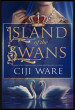
As I said in the Word Wench piece (and elaborated here on a blog post of my own entitled A Tale of Two Covers regarding my forth-coming Wicked Company), what I find so fascinating is the way books are truly categorized by their covers. Readers obviously take their cues from the images depicted on the front of a book. Here are two radically different approaches to editions of the first novel I ever wrote, Island of the Swans.
 The new Sourcebooks Landmark trade paperback cover on the left incorporates the actual 18th c. portrait of the heroine, Jane Maxwell, 4th Duchess of Gordon by George Romney, hanging now in the Scottish National Portrait Gallery.
  The Bantam mass market paperback cover on the right used modern models and classic poses used to promote romance fiction.
Romance readers know what they like and expect, and the same holds true for lovers of historical novels. If the covers don’t match the content, readers can, rightly, become highly incensed—and I don’t blame them. As with Island of the Swans and Wicked Company, my other novels always include a love story, but each one also centers on the question “What were the women doing in history?” To answer that query, the books by necessity must be extensively researched as to the role of a very small segment of the population–women who earned their own keep in a day far removed from our own.
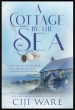
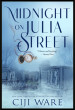
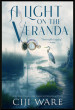
The idea that a few, talented and brave females longed for self-expression in various fields that were then the exclusive provenance of men is also central to the dual story historical/contemporary titles I’ve written: A Cottage by the Sea, Midnight on Julia Street, and A Light on the Veranda.
 From the earliest days of my career when I held at Readership in British-American History at the hallowed Huntington Library in San Marino, California, I’ve been fascinated by “professional women” in the 18th and 19th centuries and have chosen to tell the stories of female politicians, artists, writers, and musicians—all based on composites of women who really lived and plied their various crafts for money.
The problem was, the books I wrote in the 1980’s and 90’s as full-on historical novels about these “famous-but-forgotten” women of history were often saddled with some God-awful covers during the period when nearly every historical was thought to have a better chance in the marketplace if it emphasized the romance more than the history.
But bless Sourcebooks/Landmark for creating a “look” this time around that matches the contents of my historicals, so that hardcore romance readers can steer clear of them if they so chose, and lovers of historical fiction (who don’t object to a love story threaded through the narrative) might give them a try!
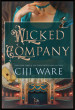
May all the readers of both the Word Wenches blog and my own blog feel so inclined October 1, when the new cover of Wicked Company–originally given an equally misleading earlier incarnation–hits the stands this time around looking like this…
 .
.
…instead of this….
Wicked Company Should be a Movie!
September 19, 2010 by ciji · Leave a Comment
On October 1, Wicked Company is about to have a new life as a nice, juicy trade paperback, courtesy of my publishers, Sourcebooks Landmark, but really, truly, I think one day it should be a movie on a large screen, in full color, and powered by THX sound!
I hold this opinion not merely because I’m proud of this historical novel–which I am, of course– but because, when I did the research, the images I found in the depths of the Huntington Library, or in the archives of the Theater Museum in London leapt out at me in a fashion that just begs for someone to make a film.
I mean, just look at the cast of characters:
We have King George III, Drury Lane actor-manager David Garrick and his wife, struggling women playwrights like the two Hannahs (Hannah More and Hannah Cowley who hated each other),along with numerous actress-playwrights like Kitty Clive and my fictional villainess, Mavis Piggott, plus the weedy little censor Edward Capell–not to mention the hero and heroine, based on a composite of theatrical figures of the day whose lives I encountered when doing the years of research.
Added to this are the amazing locations of this novel: Edinburgh, Covent Garden, Bath, Stratford, the Welsh countryside, Annapolis, Maryland, even! Theaters on both sides of the Pond became the places I had to visit when researching and writing this book.
As I look over my own photo collection, such wonderful memories rush back. The day I discovered this image of David Garrick about to stab his co-star in an eighteenth century play, now long forgotten, was a red-letter moment.
I even let out an audible yelp in the hallowed bowels of an archive not-to-be-mentioned when I stumbled across an example of the very tickets issued to gain entrance to the first Shakespeare Festival held in Stratford-Upon-Avon in 1769.
 And then there was the day when I uncovered the fact that one of my historical figures, writer James Boswell, had turned up in the pouring rain at the Shakespeare Festival dressed as a Corsican and brandishing a tall, crooked staff in order to promote a book he was writing! I mean, really! Does nothing change?
These are the moments when an author is transported back in time and can see a story unfolding as if it were a film! (From my computer to God’s ears….)