Creating Characters: What Do They Want?
April 22, 2013 by ciji · Leave a Comment
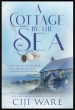
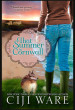
 When I originally had the notion for That Summer in Cornwall, my plan was to have my heroine, arriving in late May at shabby chic Barton Hall from Wyoming, get involved in the nursery business that had saved her cousin’s family mansion from bankruptcy a decade earlier in the prequel, A Cottage by the Sea.
 However, Meredith Champlin, an emergency room nurse at a children’s hospital, is no gardener like her cousin, Blythe Barton Teague. She was born and raised on a western sheep ranch, so I began to ruminate on what her life goals and desires might be, recalling what a wise person in the writing business once said. “Ask what your characters want—and what would they be willing to do to get it!”

First I had to ask myself: what elements are common both to Wyoming and Cornwall? The latter is a place where many immigrants came to the American West from Britain’s tin mines and fields to work in the copper and coal mines in Pennsylvania, Wyoming, and Montana and till the vast open stretches of land, raising animals for the nation’s food supply in the years following the pioneer days.
 Cattle and Sheep need herding, I thought, which meant dogs. Meredith, 35, is a pediatric nurse, so what if she had raised Corgi herding dogs as a rancher’s daughter, and also developed a pet therapy program at her hospital?
Bingo! Corgis are known as “The Queen’s Dog”—so obviously they would exist in Cornwall, too, especially because a lot of sheep are raised in the beautiful fields and on the moors in the West Country.
So, I had the answer to “what does Meredith want?” She wants to be deeply involved in the world of working dogs and would never leave her beloved Corgi, Holly, behind when life’s circumstances land her six thousand miles from her home. It was a natural fit that she could help keep Barton Hall solvent by founding the Barton Hall Canine Obedience Academy on the castle grounds.
 And what about her past? She also wants to forget an unhappy love affair with a charming, alcoholic rodeo rider and forge an entirely new life away from injured and dying children after a decade of intense, worthwhile, but exhausting service. In other words, she wants a new beginning and a way of re-inventing herself and her life’s work.
And as it happens, in Cornwall, working dogs are also trained in the field of search and rescue, due to the type of terrain where “holiday makers” routinely fall off cliffs that skirt the dramatic coastline facing the English Channel, or get lost on the remote moors, or disappear down deserted mine shafts left over from the previous century’s tin industry.
 Then one of those “Eureka!” thoughts struck. The hero could be a veteran of a dog bomb-sniffing unit in the British Forces, late of Afghanistan, who, along with his Border Collie T-Rex, has returned to Cornwall and is now a veterinarian and a member of the Cornwall Search and Rescue Team. All he wants is to be left alone to nurse his psychic wounds that vastly predate his service in the Royal Army, though at his core, he yearns for a sense of safety, connection with kindred spirits, and “home.”
So, through the magic of asking (and answering) “What do the main characters want?” I could begin to write Chapter One of That Summer in Cornwall.
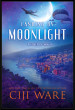
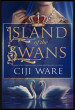
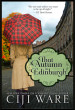
The question “What are the characters willing to do to get what they want?” is the engine that drives the plot…a subject that I will probably discuss another time for readers who speculate about such things. It’s a subject I am certainly wondering about as I prepare to start work on That Autumn in Edinburgh..a sequel two hundred years after the conclusion of my first novel, Island of the Swans…
Tea Addiction in Fiction
April 18, 2013 by ciji · Leave a Comment
 There must be a “tea gene” running through the Ware and McCullough clans, because I’m pretty sure there’s a scene where someone is making, delivery, pouring, or drinking tea in every single one of my seven works of fiction…
In That Summer in Cornwall there must be about a half dozen such scenes, and in each one, I try to recall some wonderful repast that included tea, scones, cucumber sandwiches, smoked salmon, and—gasp—even little cream puffs.

I think it all began with my father, Harlan Ware, a mid-century writer of novels, screenplays, short stories (remember The Saturday Evening Post, anyone?), and—for fourteen of its twenty-seven years on the air, the radio drama One Man’s Family set in Sea Cliff, San Francisco, not too far from where I live.

The Barbour Family in that show was always discussing “life” over a cup of tea…but, of course, listeners only heard the clinking of the chinaware, courtesy of the sound engineer baffled behind the sound-proof screen in the old NBC studios.
 When I was growing up in Carmel, California, my father and I would walk the length of the beach at four o’clock when I got home from school and he’d finished his daily script…and then go home for a “nice cuppa.”
The strange thing was that my dad had never set foot outside the United States, but he was as British as any Londoner, and having tea between four and five o’clock every day was just one example of the strength of his family origins tracing back to Devon and Cornwall.
And now, I, along with many of my closest friends, are likewise addicted to teatime. In my case, however, I am very likely to inset a scene—or two or more—into my fiction where the characters find themselves discussing life, love, and whatever problems they are having over a nice, strong amber brew.

So perhaps I can persuade you one day soon, to cozy down with a good novel, put your feet up, and enjoy a cup on me?
Scotland on my Mind: Then & Now
April 11, 2013 by ciji · Leave a Comment
 Now that I have launched That Summer in Cornwall, I was astounded to realize about two months ago that I began the research for my first novel, Island of the Swans, exactly thirty years ago this summer! It was also my first historical novel—a fictionalized retelling of the life of the amazing eighteenth century figure, Jane Maxwell (1749-1812), 4th Duchess of Gordon, about whom—I soon discovered–no full-length biography existed.
I was such a novice, it never occurred to me that merely ferreting out the details of both her public and private lives was a book in itself, let alone the task of teaching myself–a nonfiction writer at that point–how to create a novel!
So why choose Jane Maxwell? Well, not only did she marry the largest landowner in Scotland, though passionately in love with someone else; wed her five resulting daughters to the dukes of Manchester, Richmond, and Bedford, the Marquis of Cornwallis, and a baronet named Sir Robert Sinclair—she also served as flamboyant hostess to Prime Minister Pitt, the Younger, during the Madness Crisis of George III—AND….
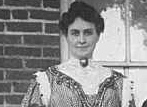 …my great-grandmother, Elfie McCullough, who lived into her 90’s, swore to my mother on the family Bible that our McCulloughs of Ayrshire–poet Robert Burns country–had married into the Maxwells of Monreith a generation or so before the future duchess was born, “making you, my dear, a direct descendant of a duchess!” (I tried, but trust me, I could never prove this without a shadow of a doubt).
Even so, I grew up on stories that the beautiful Jane, a powerhouse of a woman like Elfie herself, was also celebrated for recruiting on horseback fellow Highlanders into her brother’s regiment that fought for the British in the American War of Independence and surrendered with their Commander, Lord Cornwallis, to George Washington at Yorktown.
 Now, I freely admit that during the 1980’s I became rather obsessed with Jane’s life, even performing some of my lectures about my heroine dressed in full court regalia. In the course of more than six years researching and writing and selling this version of “Gone with the Wind of Scotland”– a story of Jane loving one man, a soldier reported to have died in the American Colonies, and marrying a duke, only to discover her lieutenant had not been killed as reported– my husband took to calling me his very own, little “Scot-o-Maniac.”
Recently, I discovered that in the years following Jane’s death, a member of the Maxwell Clan married into a Lowland family by the name of Scott—as in the famous Scottish novelist, Sir Walter Scott. This little historical nugget immediately triggered an idea for a contemporary sequel (to be titled That Autumn in Scotland as part of my forth-coming 4 Seasons Quartet series), set two hundred years later than Swans.
 What if, I mused one day in early February this year, a female American relative of the “lost lieutenant” (who had eventually abandoned Scotland at the end of the eighteenth century to settle in the Mid-Atlantic Colonies), met by sheer chance a male member of the Maxwell clan on a tour of Abbotsford, the famous baronial mansion owned by Sir Walter Scott?
And what if the pair discovered during the course of that autumn that they were direct descendants of the star-crossed lovers and were driven by curiosity and a growing attraction to each other to unravel the tale of what eventually happened to Jane and the man she could never stop loving?
From such questions a hundred thousand word novel can spring…
…and so, after three decades, it’s back to Scotland…but this time, not the Highlands, as seen here in 1983, but rather the Scottish Lowlands, land of my own Clan McCullough forebears, even if I can’t (yet) claim a “direct” connection to my eighteenth century heroine.
 Tony and I are off in June to explore the modern Scotland of tartan mills competing with the Chinese knock-off artists, castles whose land-poor owners can barely keep their heads above water, and some cultural changes that I like to imagine my savvy Duchess Jane would somehow take in stride.
Dogs as Characters in Fiction
March 29, 2013 by ciji · Leave a Comment
 I often am asked, “Do you base some of your characters on real people?” Well, fictional characters are just that: made up in the author’s mind. However, there’s no denying that there are often ‘real life’ figures who sometimes serve as inspiration. And, as I learned this year writing That Summer in Cornwall, the same goes for dog characters.
However, just to show how tricky a subject this is, you should know that this Border Collie actually is known by another name as a ‘real-life’ member of the Cornwall Search and Rescue Team… In my novel, the Border Collie T-Rex–aka Rex–became the name I gave my hero Sebastian Pryce’s dog after I met this dog, seen here having coffee at the famous Poggio’s Trattoria .
Say hello to the real T-Rex…the Great Dane, affectionately known by his intimates as “The Mayor” of a maritime village in the San Francisco Bay Area. This big boy truly was what inspired my naming this important search-and-rescue dog who figures prominently in the novel.
(Well…at least, both boys’ coats are black and white).
 And both animals have tremendously good hearts—to say nothing of their amazing noses—and, of course, I asked permission of the original T-Rex’s mistress, artist Lucinda O’Connell, if I could “borrow” his moniker.
And then there was the heroine’s dog, a sheep-herding Corgi from the pastures of Wyoming. The sassy, smart little dog started out in the first draft with the name of “Jasper”—called that in honor of my godchildren’s ‘real-life’ Corgi.
But there was just one problem: Jasper the Corgi is a boy dog with a boy dog’s name, and as I got into the plot, there were some very compelling reasons to make “him” a “her”—especially since the two dogs have a memorable “meet-up” in Chapter One—much to their human companions’ chagrin.
Therefore, in urgent need of an appropriately feminine name, the first thing that popped into my head was my friend, romance writer Cynthia Wright ’s late, great black lab, seen here with her daughter, Jenna. So “Jasper” was transformed, via a “global search and replace” on my Mac, into “Holly”– along with profuse apologies to my godchildren Andrew and Grace.

So, there you have it! Life in the fictional world can be just as rough as Hollywood…and some of the best performers are left on the cutting room floor…
Researching a Novel The Old Fashioned Way
March 10, 2013 by ciji · Leave a Comment
 I spent more than twenty years as a working reporter (mostly at the ABC television and radio affiliate in Los Angeles) and as a magazine journalist—and my first instinct when I get an idea for an historical or contemporary novel is to go where the book is set.
With That Summer in Cornwall—a stand-alone contemporary sequel to my “time-slip” novel A Cottage by the Sea—the action takes place a good decade after the ending of the contemporary part of the novel. In my mind, there was no choice: I had to return to the area because the premise of the new book was: “What ever happened to that babe in arms in the first book…and what’s Cornwall, England like some ten years, plus, later?”
 Once I determined I was, in fact, going to do a sequel to the original novel set in Cornwall, I immediately called up my good writing pal, romance novelist Cynthia Wright with whom I’d made my first trip to Britain’s West Country to research the original book (and she, a couple of her own) and said, “Wanna go back to Gorran Haven and Mevagissey with me and see what trouble we can get into again?” Her answer? “Absolutely, if we can also go to that seaside village, Polperro and Lansallos, where all the eighteenth century pirates hung out. I’m thinking of doing a couple of books that deal with smuggling…”
So off we went in October of 2012, retracing some of the same areas we’d visited in the late 1990s and heading off into new territory as well. We still managed the six-mile “Hall Walk” a second time, and paused at the bridge at Pont Pill where we’d rented a Lime Kiln Cottage from the National Trust on the first trip. For the research jaunt last autumn, we decided to rent a suite at Caerhays Castle near Gorran Haven, the model for “Barton Hall,” an important element in both books set in Cornwall.
 This contemporary novel centers on the story of Meredith Champlin—a cousin of Lady Blythe Barton-Teague who is the mistress of Barton Hall and the heroine in Cottage. Meredith wakes up one morning in her home state of Wyoming to discover she is the official guardian of an unruly “Beverly Hills brat” whom she’s never met and hasn’t a clue how to serve as the unhappy child’s surrogate mother. Her elegant cousin Blythe, now the mother of two thanks to her second marriage to the wonderful Sir Lucas Teague, urges Meredith to come to their shabby-chic castle on a remote cliff in Cornwall for the summer to see if they can’t transform this angry, difficult child (whose mother is Blythe’s estranged sister and has died in a private plane crash) into “a decent human being.” For me, returning to actually reside within the castle walls allowed me to capture the unique atmosphere of the place local novelist Daphne du Maurier called “Enchanted.”
Not only did I call on my reportorial skills to capture the local color and feel of this special part of the world, but I also conducted a number of interviews about the amazing volunteer search-and-rescue work in Cornwall performed by highly trained dogs and their handlers who find “holiday makers” known for falling off cliffs, down abandoned tin and copper mine shafts, along with “despondents” who have wandered up on the moors to commit suicide. The enigmatic hero, Sebastian Pryce, a British Army veteran of the Afghan War who served as a K9 specialist in a dog bomb-sniffing squad, persuades Meredith to co-found a dog obedience academy, with many unexpected consequences flowing from their decision to work together—including, of course, their falling in love.
 I even managed to wangle an interview with the chief Dog Unit Manager for the Devon and Cornwall Constabulary (ie the police), Anthony Jordan, who walked me through police operations that coordinate the volunteer corps, Coast Guard, Royal Air Force, and other organizations that make up the network of the search and rescue community.
Their work was amazing and thrilling in so many ways, and I hope that my use of reportorial skills to capture the authenticity of their various activities shines through That Summer in Cornwall–while also telling a ripping good story!
And if any readers are of a mind, a nice review posted on your favorite e-retailer site would be most appreciated. You cannot image how hugely helpful reader reviews are to get out the word when a book is launched. The print version will be available sometime later in March.