Tea Addiction in Fiction
April 18, 2013 by ciji · Leave a Comment
 There must be a “tea gene” running through the Ware and McCullough clans, because I’m pretty sure there’s a scene where someone is making, delivery, pouring, or drinking tea in every single one of my seven works of fiction…
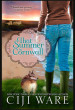
In That Summer in Cornwall there must be about a half dozen such scenes, and in each one, I try to recall some wonderful repast that included tea, scones, cucumber sandwiches, smoked salmon, and—gasp—even little cream puffs.

I think it all began with my father, Harlan Ware, a mid-century writer of novels, screenplays, short stories (remember The Saturday Evening Post, anyone?), and—for fourteen of its twenty-seven years on the air, the radio drama One Man’s Family set in Sea Cliff, San Francisco, not too far from where I live.

The Barbour Family in that show was always discussing “life” over a cup of tea…but, of course, listeners only heard the clinking of the chinaware, courtesy of the sound engineer baffled behind the sound-proof screen in the old NBC studios.
 When I was growing up in Carmel, California, my father and I would walk the length of the beach at four o’clock when I got home from school and he’d finished his daily script…and then go home for a “nice cuppa.”
The strange thing was that my dad had never set foot outside the United States, but he was as British as any Londoner, and having tea between four and five o’clock every day was just one example of the strength of his family origins tracing back to Devon and Cornwall.
And now, I, along with many of my closest friends, are likewise addicted to teatime. In my case, however, I am very likely to inset a scene—or two or more—into my fiction where the characters find themselves discussing life, love, and whatever problems they are having over a nice, strong amber brew.

So perhaps I can persuade you one day soon, to cozy down with a good novel, put your feet up, and enjoy a cup on me?
Book Bargain Bulletin from Ciji!
April 16, 2013 by ciji · Leave a Comment
 I woke up to the news this morning that–in the mysterious ways of Amazon–my ‘time-slip’ novel A Light on the Veranda is today’s (April 16th) “Kindle Daily Deal”–which means you can secure an 88% (!) saving if you click over there asap! These deals usually only last a day or two, so I wrote this “emergency blog” to let any reader who wanted to get a copy could quickly grab one!
The story, set in both nineteenth and twenty-first century Natchez, takes place in “The Town That Time Forgot” where there are sixty “tour-able” mansions built in a time when “Cotton Was King” and plantation owners erected replicas in this market town of their larger, elegant houses in the nearby Mississippi countryside.
The heroine, Daphne Duvallon, was the character in Midnight on Julia Street who blew off her wedding in the first chapter and high-tailed it back to New York City, never to be heard from again until her brother’s wedding forces her to return to the South and confront her devils. Thanks to a harp whose vibrations whisk Daphne back to the time of her ancestors, she discovers events from her family’s past that still echo down to her own life, and that of the arrestingly handsome Simon Hopkins, a nature photographer in the Natchez area stalking birds once painted by John James Audubon.
 Given that spring has sprung along the Mississippi right now, what better time than to indulge in a bargain book that will whisk you to one of the most historic and memorable places in the United States?
Thank you Amazon/Kindle!
Scotland on my Mind: Then & Now
April 11, 2013 by ciji · Leave a Comment
 Now that I have launched That Summer in Cornwall, I was astounded to realize about two months ago that I began the research for my first novel, Island of the Swans, exactly thirty years ago this summer! It was also my first historical novel—a fictionalized retelling of the life of the amazing eighteenth century figure, Jane Maxwell (1749-1812), 4th Duchess of Gordon, about whom—I soon discovered–no full-length biography existed.
I was such a novice, it never occurred to me that merely ferreting out the details of both her public and private lives was a book in itself, let alone the task of teaching myself–a nonfiction writer at that point–how to create a novel!
So why choose Jane Maxwell? Well, not only did she marry the largest landowner in Scotland, though passionately in love with someone else; wed her five resulting daughters to the dukes of Manchester, Richmond, and Bedford, the Marquis of Cornwallis, and a baronet named Sir Robert Sinclair—she also served as flamboyant hostess to Prime Minister Pitt, the Younger, during the Madness Crisis of George III—AND….
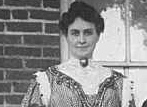 …my great-grandmother, Elfie McCullough, who lived into her 90’s, swore to my mother on the family Bible that our McCulloughs of Ayrshire–poet Robert Burns country–had married into the Maxwells of Monreith a generation or so before the future duchess was born, “making you, my dear, a direct descendant of a duchess!” (I tried, but trust me, I could never prove this without a shadow of a doubt).
Even so, I grew up on stories that the beautiful Jane, a powerhouse of a woman like Elfie herself, was also celebrated for recruiting on horseback fellow Highlanders into her brother’s regiment that fought for the British in the American War of Independence and surrendered with their Commander, Lord Cornwallis, to George Washington at Yorktown.
 Now, I freely admit that during the 1980’s I became rather obsessed with Jane’s life, even performing some of my lectures about my heroine dressed in full court regalia. In the course of more than six years researching and writing and selling this version of “Gone with the Wind of Scotland”– a story of Jane loving one man, a soldier reported to have died in the American Colonies, and marrying a duke, only to discover her lieutenant had not been killed as reported– my husband took to calling me his very own, little “Scot-o-Maniac.”
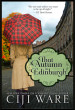
Recently, I discovered that in the years following Jane’s death, a member of the Maxwell Clan married into a Lowland family by the name of Scott—as in the famous Scottish novelist, Sir Walter Scott. This little historical nugget immediately triggered an idea for a contemporary sequel (to be titled That Autumn in Scotland as part of my forth-coming 4 Seasons Quartet series), set two hundred years later than Swans.
 What if, I mused one day in early February this year, a female American relative of the “lost lieutenant” (who had eventually abandoned Scotland at the end of the eighteenth century to settle in the Mid-Atlantic Colonies), met by sheer chance a male member of the Maxwell clan on a tour of Abbotsford, the famous baronial mansion owned by Sir Walter Scott?
And what if the pair discovered during the course of that autumn that they were direct descendants of the star-crossed lovers and were driven by curiosity and a growing attraction to each other to unravel the tale of what eventually happened to Jane and the man she could never stop loving?
From such questions a hundred thousand word novel can spring…
…and so, after three decades, it’s back to Scotland…but this time, not the Highlands, as seen here in 1983, but rather the Scottish Lowlands, land of my own Clan McCullough forebears, even if I can’t (yet) claim a “direct” connection to my eighteenth century heroine.
 Tony and I are off in June to explore the modern Scotland of tartan mills competing with the Chinese knock-off artists, castles whose land-poor owners can barely keep their heads above water, and some cultural changes that I like to imagine my savvy Duchess Jane would somehow take in stride.
If These Castle Walls Could Talk…
April 5, 2013 by ciji · Leave a Comment
 There are travelers who will tell you, “You’ve seen one castle, you’ve seen ‘em all,” but when I’m in the throes of constructing a novel set in Great Britain, castles seem to me as important as “characters” as any of the humans that populate my stories.
Each of these fortresses has its own, specific story to tell: who built them and why? What were they trying to protect? Who was born here; who died here? And most importantly…who loved—or hated—their fellow inhabitants here?
Call me the Ultimate Romantic, but over the years of researching my various historicals, I sometimes think that the stones  whisper their tales…if the traveler can just remain quiet enough to hear what they have to say.
 I felt that “presence” of those who had come before so vibrantly at Caerhays Castle, the turreted stone edifice that was the model for “Barton Hall” in That Summer in Cornwall. It’s round towers and views of the English Channel and the lonely lookout cottage on the property’s cliff conjured up a story that practically told itself.
Now that I’m in the midst of the preliminary research for That Autumn in Edinburgh which will focus on the descendants—one Scottish, one American—of the star-crossed lovers in my first novel, Island of the Swans, I find myself also plotting my trip to the Scottish Border territory south of Edinburgh.
Here I’ve set up an interview with the man who has spearheaded the mulit-milion dollar refurbishment of Sir Walter Scott’s Abbottsford where I’ve recently discovered the novelist’s family were intermarried with descendants of Jane Maxwell, 4th Duchess of Gordon, the heroine of Island of the Swans whose clan once inhabited this ominous turreted fortress on the right.
 And then there’s Ayton Castle, the forerunner of the now-destroyed Ayton House where Jane received a letter a month following her arranged marriage to the Duke that the great love of her life had not died in an American Indian skirmish outside Fort Pitt, Pittsburgh, and was coming home thinking to claim her as his own.
Knowing this story, how would a modern Maxwell male descendant, struggling to keep a traditional tartan mill afloat–along with a Fraser, visiting from America in an attempt to recover from a tragic loss of her own– feel as they walked the banks of the River Eye on the exact spot where Jane learned of her lover’s survival, far too late for her to find lasting happiness with Lieutenant Thomas Fraser?
Asking a simple question like that…and listening intently to the standing stones and rustling wind might easily spark a writer’s imagination…
Dogs as Characters in Fiction
March 29, 2013 by ciji · Leave a Comment
 I often am asked, “Do you base some of your characters on real people?” Well, fictional characters are just that: made up in the author’s mind. However, there’s no denying that there are often ‘real life’ figures who sometimes serve as inspiration. And, as I learned this year writing That Summer in Cornwall, the same goes for dog characters.
However, just to show how tricky a subject this is, you should know that this Border Collie actually is known by another name as a ‘real-life’ member of the Cornwall Search and Rescue Team… In my novel, the Border Collie T-Rex–aka Rex–became the name I gave my hero Sebastian Pryce’s dog after I met this dog, seen here having coffee at the famous Poggio’s Trattoria .
Say hello to the real T-Rex…the Great Dane, affectionately known by his intimates as “The Mayor” of a maritime village in the San Francisco Bay Area. This big boy truly was what inspired my naming this important search-and-rescue dog who figures prominently in the novel.
(Well…at least, both boys’ coats are black and white).
 And both animals have tremendously good hearts—to say nothing of their amazing noses—and, of course, I asked permission of the original T-Rex’s mistress, artist Lucinda O’Connell, if I could “borrow” his moniker.
And then there was the heroine’s dog, a sheep-herding Corgi from the pastures of Wyoming. The sassy, smart little dog started out in the first draft with the name of “Jasper”—called that in honor of my godchildren’s ‘real-life’ Corgi.
But there was just one problem: Jasper the Corgi is a boy dog with a boy dog’s name, and as I got into the plot, there were some very compelling reasons to make “him” a “her”—especially since the two dogs have a memorable “meet-up” in Chapter One—much to their human companions’ chagrin.
Therefore, in urgent need of an appropriately feminine name, the first thing that popped into my head was my friend, romance writer Cynthia Wright ’s late, great black lab, seen here with her daughter, Jenna. So “Jasper” was transformed, via a “global search and replace” on my Mac, into “Holly”– along with profuse apologies to my godchildren Andrew and Grace.

So, there you have it! Life in the fictional world can be just as rough as Hollywood…and some of the best performers are left on the cutting room floor…